

Certification Dossier · Refrigerated, Frozen, HPP & Cold-Pressed
Cold processing removes some heat-related kosher equipment concerns, but it does not remove kosher requirements for ingredients, equipment, produce inspection, cooking, or chain of custody. That is the distinction this article is built on, and it applies to refrigerated, frozen, HPP, and cold-pressed foods alike.
- Subject
- Cold-pressed and HPP juice, HPP dips and salads, refrigerated prepared meals, veggie burgers, frozen vegetables and fruit, frozen entrées, and fresh-cut produce
- Audience
- Refrigerated and frozen food brands and the co-manufacturers, commissary kitchens, HPP tollers, and cold-storage operators that serve them
- Scope
- Cold routes of transfer, HPP and toll processing, grape juice, the cooking rule, insect inspection, blanching, kashering versus cleaning, co-manufacturing, the cold chain, and documentation
- Certifier
- EarthKosher Kosher Certification Agency
At a glance: where kosher review focuses
- Cold-pressed juice: grape products, produce inspection, ingredients, and cold-contact equipment.
- HPP: ingredients, pre-HPP processing, product identification, package integrity, and toll processing.
- Refrigerated prepared foods: cooking, bishul akum, meat/dairy/fish controls, and shared equipment.
- Frozen vegetables: insect inspection, blanching equipment, and shared processing lines.
- Cold storage: generally low risk for sealed, labeled products; higher risk for bulk, open, unlabeled, or repacked product.
Much of kosher equipment law concerns heat, because heat is the fastest way a kettle, fryer, or pasteurizer takes on the character of what it held. A juice that is pressed cold, bottled cold, and treated by high pressure processing avoids that particular problem. It does not avoid kosher review.
What the review finds is a different set of questions. Kosher law recognizes cold routes of transfer, and fresh produce brings an inspection obligation. The cold chain also moves product through more outside hands (a high pressure toller, a co-manufacturer, a third-party cold store) than most shelf-stable foods see, sometimes before a label has been applied.
In practice, certification in this category is less about what is in the product than about where it has been and what it looked like when it got there.
01What makes refrigerated and minimally processed products different from a kosher standpoint?
Refrigerated and minimally processed products are different because the processing steps that normally settle kosher questions are missing, by design. A cold-pressed juice or a refrigerated grain bowl is built from raw or lightly handled components, protected by temperature in place of a kill step, and frequently finished somewhere other than where it was made.
A kosher review follows the product along that route: ingredients, processing, equipment, packaging, toll processing, storage, and distribution. The issues this article covers are:
- Cold transfer: soaking, brining, and sharp ingredients cut on shared blades
- High pressure processing, toll processors, and unlabeled product in transit
- Cold-pressed juice, including grape juice and leafy greens
- Refrigerated prepared foods, where the cooking rule and the meat, dairy, and fish rules apply
- Fresh and frozen produce, insect inspection, and blanching lines
- Shared equipment: which has to be kashered and which only has to be clean
- Co-manufacturers and commissary kitchens
- Cold storage, warehousing, and distribution
- The documentation a brand should assemble before applying
02Which refrigerated and frozen products raise which kosher issues?
Each refrigerated or frozen product form has its own primary kosher issue, and identifying yours tells you which documents to gather first.
| Product | Primary kosher issue | First documents to provide |
|---|---|---|
| Cold-pressed and HPP juice | Grape ingredients, produce washing and inspection, the HPP toller | Full formula with every juice source; the toller’s kosher status |
| HPP dips, guacamole, salsa, wet salads | Cooked components, acidulants and flavors, labeling after HPP | Process flow showing where product is cooked and where it is labeled |
| Refrigerated prepared meals and grab-and-go | Who starts the cook; meat, dairy, and fish handling; commissary sharing | Kitchen equipment list and production schedule |
| Refrigerated and frozen veggie burgers | Cooked beans and grains, vegetable inspection, forming and baking lines | Supplier certificates for cooked or canned components |
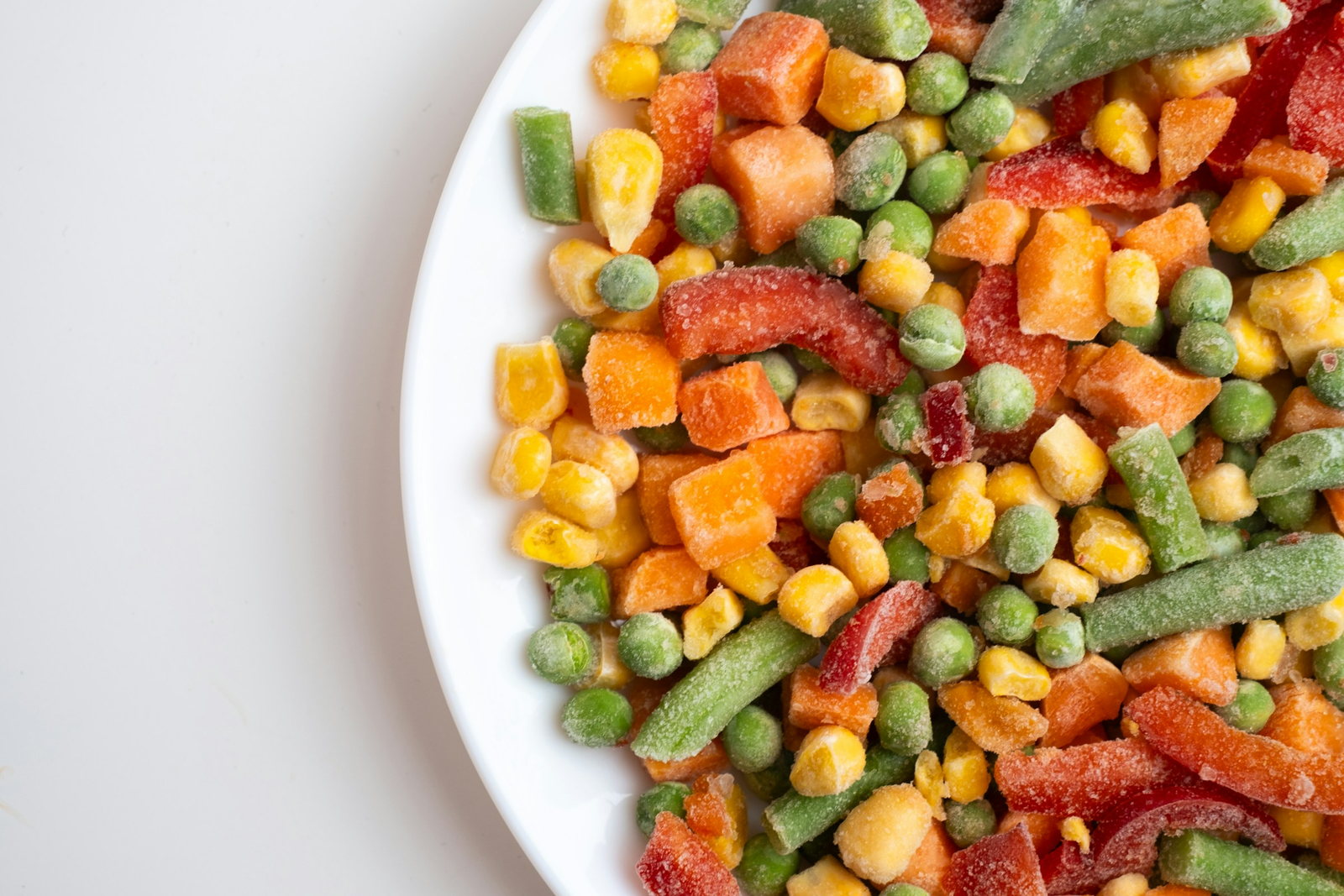
| Frozen vegetables | Insect inspection by vegetable type; blancher sharing | Vegetable list by SKU; what else the blancher runs |
| Frozen fruit, purées, smoothie packs | Fruit type and origin; anything added to the fruit | Country of origin; additive and processing-aid list |
| Frozen entrées, breaded and par-fried items | Fryer oil and fryer sharing, sauces, cheese | Fryer schedule; oil and batter specifications |
| Fresh-cut produce and salad kits | The inspection program; kit components | Wash-line description; certificates for dressings and toppings |
03Does cold processing mean equipment status no longer matters?
Cold processing reduces the equipment question but does not remove it, because kosher law recognizes three ways a vessel and a food exchange taste without heat. All three occur in ordinary refrigerated production.
Kavush: extended soaking
- Kavush
- Extended soaking. A liquid that rests in a vessel for 24 consecutive hours is treated as though it had been cooked there, so that the vessel takes on the liquid’s status.
A jacketed holding tank that keeps a dairy smoothie base overnight and through the next day is, in kosher terms, a dairy tank, though nothing in it was ever warm. Keeping the tank chilled does not change that.
The operational consequence is a clock. Hold times, weekend holds, and which tanks carry which products past the 24-hour mark become part of the kosher program. A tank that crossed that line with non-kosher or dairy product needs kashering, not just sanitation, before a pareve (neither meat nor dairy) product goes into it.
Brine
A heavily salted liquid is treated as transferring taste in minutes, not in a day. That puts a shared brine tank for cheese, pickled vegetables, olives, or cured fish on a much shorter time scale than a shared juice tank.
Davar charif: sharp foods cut on shared blades
- Davar charif
- The kosher category for certain sharp foods such as raw onion, garlic, radish, and horseradish.
When a sharp food is cut with a blade, the pressure of the cut is treated as moving taste between blade and food without any heat at all. A dicer that runs raw onions for a pareve salsa and also runs cheese, or non-kosher meat in a commissary, is the plant-floor version of that rule.
Which ingredients count as sharp, and how the rule is applied to high-speed industrial slicers, dicers, and bowl choppers, varies among authorities. It is a determination your certifying agency makes for your equipment.
04How does HPP affect kosher certification?
HPP affects kosher certification mainly through logistics, because high pressure processing is cold and is applied to product already sealed in its final package. Bottles or tubs are loaded into a carrier, the vessel is flooded with chilled water, and pressure of up to roughly 600 MPa (87,000 psi) is held for a few minutes.
Compression warms the water by only a few degrees per 100 MPa, so from a chilled start the vessel stays far below any temperature kosher law treats as cooking. The food does not touch the vessel. From an equipment standpoint, HPP is a forgiving step.
Three things still need attention.
Toll processing
The first is toll processing. HPP capacity is expensive, so much of it is sold as a toll service, and a toll processor runs whatever its customers send: juices, dips, deli meats, seafood, pet food. Packages occasionally leak under pressure, and process water is commonly recirculated between cycles. A kosher program at a toller therefore addresses what happens after a leaker in a non-kosher load, typically removal of the damaged product and a water change before the kosher cycle. The exact control is set by the certifying agency.
Labeling and product identity
The second is labeling. Many products go into the vessel unlabeled, because paper labels and some sleeves do not survive immersion. That means a pallet of unmarked tubs leaves a certified plant, sits in a toller’s cooler beside other customers’ unmarked tubs, and is labeled afterward, sometimes at a third site.
Kosher certification requires reliable identification and traceability of the product inside the package, so the program has to carry identity across that gap. The usual tools are lot coding on the container itself, customer and product codes on carriers and pallets, and reconciliation of counts out and back.
Pressure is not cooking
The third is a limit. HPP is pasteurization for food-safety purposes but it is not cooking for kosher purposes. It does not kasher equipment, it does not satisfy the cooking rule that applies to prepared foods, and it does not give grape juice the “cooked” (mevushal) status that changes how grape juice may be handled. A formulation plan that assumes pressure does what heat does will need to be revisited.
In shortThe kosher implication is that the HPP vessel itself usually matters less than product identification, package integrity, process-water controls, and the handling of product before and after HPP.
05What does kosher certification of cold-pressed juice turn on?
Kosher certification of cold-pressed juice turns on two ingredients far more than on the press: grapes and greens.
- Stam yeinam
- The rule that grape juice and wine handled by a non-Jew are prohibited. It applies to grape juice wherever it appears, including as a sweetener or color in a blend that is mostly something else.
- Mevushal
- “Cooked” status for grape juice, which changes how grape juice may be handled. It comes from heat.
Certified kosher grape juice can be sourced, generally in mevushal form. Pressing fresh grapes in a conventional juicery is another matter, because the restriction attaches at the point the juice separates from the fruit, which is exactly what a press does.
Greens raise the insect question. Kale, spinach, parsley, cilantro, mint, and romaine are all vegetables with a recognized infestation concern, and the prohibition on eating insects is not suspended because the vegetable is about to be juiced.
Practice differs on how much washing or inspection is required when produce will be pressed and filtered instead of eaten whole, and on whether filtration through a press bag resolves the concern. This is an agency determination, and it drives real cost: the difference between a validated wash line and sampling by a mashgiach, the kosher supervisor, is a difference in labor.
The grinders, bag presses, and fillers themselves run cold, so the equipment questions are the hold-time ones described above.
06Why do refrigerated prepared foods need more supervision than their ingredient lists suggest?
Refrigerated prepared foods need more supervision because they are cooked foods sold cold, and kosher law has a rule about who does the cooking. Chilling a food after it is cooked does not change that.
- Bishul akum
- A rabbinic prohibition on certain foods cooked entirely by a non-Jew. It applies to foods that are not eaten raw and that are fit to be served at a formal meal.
That describes much of a grab-and-go case: rice, quinoa and other grains, pasta, potatoes, eggs, roasted vegetables, cooked legumes.
A Jew’s participation in the cooking resolves it. What counts as sufficient participation differs between Ashkenazi and Sephardi practice, and which foods and which cooking methods (direct steam, for instance) fall under the rule in an industrial setting are agency-dependent.
The operational consequence is presence at the start of a cook. In a prepared-foods kitchen running kettles, tilting skillets, and combi ovens across two shifts, the question is who lights or switches on each piece of equipment and when, and whether cooks can be consolidated so a mashgiach’s time is used efficiently.
Buying components already cooked under certification, such as canned beans or cooked grains with their own kosher certificate, moves that question upstream and can simplify a program considerably.
Three further rules shape the menu:
- Meat and dairy may not be combined, and kosher meat and poultry bring sourcing and supervision requirements that usually mean a mashgiach on site throughout.
- Cheese requires Jewish involvement in its making regardless of the milk, so the feta in a grain bowl needs its own reliable certificate.
- Fish is not combined with meat, which reaches further than a menu suggests. Worcestershire sauce contains anchovy, and how a dressing made with it is treated alongside chicken is a question for your certifying agency.
07What do fresh produce and frozen fruits and vegetables require?
Fresh produce and frozen fruits and vegetables require, above all, an answer to the insect question.
- Tolaim
- Insect infestation — the reason a food with one ingredient can still need certification.
Insect inspection
Leafy greens, fresh herbs, broccoli, cauliflower, asparagus, artichoke hearts, and some berries are the recurring cases, while corn, peas, carrots, and most tree fruit generally are not. Freezing does not resolve infestation, and frozen product is harder to inspect than fresh.
Certification of an infestation-prone vegetable usually rests on sampling by lot, sometimes on sourcing by season or growing region. Standards and methods are set by the certifying agency. Practice also differs on whether puréeing changes the requirement, which matters to anyone making frozen purées, smoothie packs, or vegetable-based patties.
Blanchers and freezing tunnels
Frozen vegetables are blanched before freezing, a brief pass through hot water or steam to stop enzyme activity. A blanch is generally too brief to raise the cooking rule, though blanching parameters vary and your agency will look at yours. The blancher itself is hot equipment.
If the same line also cooks pasta, or runs vegetables in a dairy or meat-flavored sauce, the plain vegetables that follow are affected and the line needs kashering between them. Shared blanchers can also keep a year-round certified frozen vegetable from being certified for Passover.
The freezing tunnel, whether spiral, fluidized-bed IQF, or plate, runs cold. It is generally treated as a cleaning matter, subject to what else it runs and to agency standards.
Washes, dips, and country of origin
Two smaller points belong on the checklist. Anti-browning dips, coatings, and antimicrobial washes on fresh-cut and frozen fruit are reviewed as ingredients. And produce grown in Israel is subject to agricultural laws, including tithes and the sabbatical year, that do not apply elsewhere, so country of origin is a kosher data point.
08Which shared equipment has to be kashered, and which only has to be clean?
Shared equipment has to be kashered when it has absorbed taste through heat or one of the cold routes described above, and only has to be clean when it has not.
- Kashering
- The process of purging what equipment has absorbed, usually with boiling water or steam after the equipment has stood idle for 24 hours.
What follows is a general framework, not a ruling on any particular plant. The split in a refrigerated or frozen plant generally looks like this:
| Equipment group | Examples | What sharing generally requires |
|---|---|---|
| Hot equipment | Kettles, blanchers, steam tunnels, fryers, ovens, heat-pasteurizers, and hot-fill lines | These take on status from what they run and need kashering between non-kosher and kosher product, or between dairy or meat and pareve. |
| Cold equipment with extended contact | Holding tanks past 24 hours, brine tanks, marinating tumblers | Evaluated under the soaking and brine rules. |
| Cold equipment with brief contact | Conveyors, tumblers, formers, depositors, fillers, freezing tunnels, and the HPP vessel | A thorough cleaning that leaves no residue is generally what is required. |
| Blades | Slicers, dicers, and choppers that cut sharp ingredients | Evaluated case by case. |
An allergen cleanout is aimed at residue and often satisfies the third group. It does not address the first two, because kashering is not about residue.
Some hot equipment, such as a continuous fryer shared with a non-kosher breaded item, cannot practically be kashered, and the answer is dedication or a different line. The exact control for any piece of equipment is determined by the certifying agency based on the equipment, the process, and the applicable halachic standards.
09How does co-manufacturing change kosher certification for a refrigerated brand?
Co-manufacturing changes kosher certification because the certificate follows the facility and the run, not the brand. A refrigerated brand that owns a recipe and a label but no plant is certified through its co-manufacturer’s kosher program. That program has to cover the specific lines, the specific schedule, and every ingredient the co-manufacturer buys on the brand’s behalf.
A refrigerated co-manufacturer or commissary kitchen may produce meat entrées, cheese-based dips, seafood salads, and a vegan line on overlapping equipment. Certifying one brand’s products there means defining which equipment is used, what is kashered before the run and who is present for it, how kosher ingredients and work-in-process are segregated in shared coolers, and how the finished run is identified.
Ingredient substitutions by the co-manufacturer need to pass through the approved ingredient list before they reach the floor. A co-manufacturer that swaps one brand of cooked chickpeas for another because of a short delivery has changed the kosher file, even though the recipe reads the same.
If pareve status matters commercially, settle it before signing. A pareve product made on dairy equipment that has not been kashered is designated DE (dairy equipment), not pareve.
10Does cold storage, warehousing, or distribution affect kosher status?
Cold storage, warehousing, and distribution generally do not affect the kosher status of product that is sealed and labeled, and they can affect product that is not. A finished case of certified frozen fruit sitting in a public freezer beside non-kosher product has not changed. Kosher law’s concern is contact and identity, and a sealed, labeled package preserves both.
The exposure is in the exceptions:
- Warehouse services. Third-party cold stores also temper, repack, relabel, kit, and build variety packs, and each of those is a production step that needs to sit inside a kosher program.
- Bulk liquids. Juice, purée, liquid egg, and dairy move in tankers and totes whose prior cargo and wash history matter, for the soaking and heat reasons already described.
- Unlabeled product. Product in transit to and from an HPP toller depends on the coding and reconciliation described above.
- Seals. Kosher meat, poultry, fish, wine, and certain dairy products carry a stricter rule: when they leave the custody of a kosher supervisor, they generally must be sealed in a way that shows tampering. Which products need seals, and how many, is set by the certifying agency.
11What documentation should a brand prepare before applying for kosher certification?
A brand applying for kosher certification of a refrigerated, frozen, HPP, or cold-pressed product should prepare documentation that describes where the product goes as well as what is in it. The core set:
- A complete ingredient list for every SKU, including processing aids, washes, anti-browning agents, release agents, and flavors, with the manufacturer of each
- Current kosher certificates for each ingredient, matching the item and manufacturer named on the label you receive
- A process flow for each product showing every heated step, every hold longer than a shift, and every point where product leaves the building
- An equipment list showing what else runs on each kettle, blancher, fryer, tank, and blade
- Names and addresses of co-manufacturers, HPP tollers, labelers, and cold-storage or repacking sites, with any kosher certificates they hold
- A description of how unlabeled product is coded and reconciled
- For produce, a list of vegetables and fruits by SKU, with origin and the current washing or inspection procedure
12How does EarthKosher handle certification for these products?
EarthKosher certifies refrigerated, frozen, HPP, and cold-pressed products through ingredient review, a facility inspection, and a written program setting out any kashering, scheduling, and supervision the process requires. Ingredient submissions and supplier documentation are handled digitally.
EarthKosher certifies over 600 companies across more than 40 countries, with a concentration in the natural and organic sector. For this category, timelines tend to be set by supplier response and by how quickly the outside sites in the chain can be documented. The steps are described on EarthKosher’s kosher certification process page.
Working with EarthKosher
EarthKosher handles ingredient submissions and supplier documentation digitally and follows a seven-step certification process.
13Examples of EarthKosher-certified companies in this category
EarthKosher certifies companies across the refrigerated case, the freezer case, and cold-pressed juice:
- Actual Veggies makes veggie burgers built from whole vegetables, beans, and oats, sold both refrigerated and frozen.
- Pitaya Foods produces organic frozen dragon fruit in smoothie packs and cubes, sourced from family farms in Nicaragua, along with other frozen superfruit products.
- Raw Generation makes cold-pressed juices and juice cleanses.
14Frequently asked questions
Is an HPP product automatically kosher because nothing is heated?
No. HPP addresses food safety, not kosher status. The ingredients, any cooked components, the equipment the product ran on before packaging, and the handling of unlabeled product at the HPP facility all still require review. HPP’s advantage is that the pressure step itself rarely creates an equipment problem.
Does HPP make grape juice mevushal?
No. Mevushal status comes from heat, and high pressure processing is a cold process. Grape juice that has only been through HPP is handled under the rules for non-mevushal grape juice.
Can cold-pressed juice containing grape juice be certified kosher?
Yes, if the grape juice is kosher certified and handled according to the rules for grape products. Grape juice is the one common juice ingredient with its own supervision requirement. Disclose every juice in the blend, including those used at low levels for color or sweetness.
Does cold processing eliminate the need for kashering?
No. Cold processing removes the heat-related reasons for kashering but not the cold ones. A tank that held dairy or non-kosher liquid for 24 hours, a shared brine tank, and in some cases a blade used on sharp foods can each require kashering or another control set by the certifying agency.
Does a refrigerated prepared food still raise a bishul akum question?
Yes. Bishul akum concerns how a food was cooked, and refrigerating or freezing it afterward does not change that. The question is settled at the kettle or oven, not in the cooler.
Do plain frozen vegetables need kosher certification?
It depends on the vegetable and the plant. Vegetables with a recognized infestation concern, such as broccoli, cauliflower, spinach, and asparagus, need an inspection program, and any frozen vegetable blanched on a line shared with pasta or sauced products raises an equipment question. Standards for both are set by the certifying agency.
Does freezing resolve kosher concerns in vegetables?
No. Freezing does not remove insects, and it does not change what a shared blancher ran before the vegetables. Both questions are answered before the product reaches the freezer.
Does a mashgiach need to be on site full time for refrigerated prepared foods?
Not necessarily. Presence follows the process: the start of cooks subject to bishul akum, kashering between runs, produce inspection, and any production involving meat or poultry. A vegetarian product assembled from certified components may need only periodic inspection, while a commissary cooking from scratch needs scheduled presence.
Is kosher product compromised by sharing a freezer or truck with non-kosher product?
Generally no, when the finished product is sealed and labeled. The concerns are bulk and open product, unlabeled product, and any tempering, repacking, or relabeling done at the warehouse. Kosher meat, fish, and some other products may additionally require tamper-evident seals in transit, as your certifying agency specifies.
15Getting started
If you make or market a refrigerated, frozen, HPP, or cold-pressed product, the useful first step is to map the product’s route: every site it passes through between raw ingredient and retail case, and what it looks like at each handoff. Put that map beside your ingredient list and your equipment list.
Most of what a kosher review will ask is already visible there: the hold that runs past 24 hours, the blancher that also runs pasta, the pallet that travels unlabeled.
EarthKosher can review that picture and tell you which parts of the process are already compliant, which need documentation, and which would require an operational change. Request a quote to start the conversation.
Next step
Have your product’s route reviewed
Request a quote or read more about how EarthKosher’s certification process works.
Kosher certification for functional beverages · Kosher certification for hummus, dips, and spreads · Browse the Knowledge Center
About the author. Rabbi Yehuda Goldman is CEO of EarthKosher Kosher Certification Agency, which certifies more than 600 companies across over 40 countries with a concentration in the natural and organic sector.
This article is general guidance on how refrigerated, frozen, HPP, and cold-pressed foods are evaluated for kosher certification. Specific determinations — including how the soaking, brine, and sharp-food rules apply to your equipment, what produce inspection is required, how bishul akum is addressed in your kitchen, and what controls apply at an HPP toller or cold store — are made by your certifying agency against your actual materials, suppliers, and facilities.