
Certification Dossier · Frozen Fruit & Produce
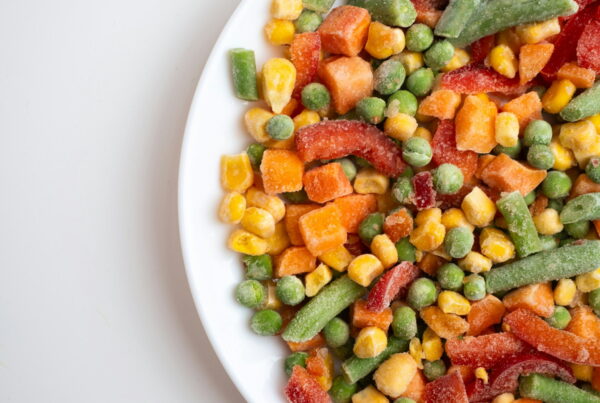
Frozen fruit is one of the simplest categories in kosher certification. Fruits and vegetables that are harvested and minimally processed — washed, cut, and frozen — are generally recognized as kosher, so the file focuses on confirming standards at the processing facility rather than on the produce itself.
- Subject
- IQF and bulk frozen fruit, purees, and minimally processed produce
- Audience
- Freezers, packers, and frozen fruit brand owners
- Scope
- Produce status · Facility review · Infestation-prone fruit · Israeli-grown produce
- Decided by
- The processing facility, since the fruit itself raises no question
- Certifier
- EarthKosher Kosher Certification Agency
Key takeaways
Why frozen fruit certifies quickly
- Minimally processed produce is generally recognized as kosher.
- Frozen fruit does not require the supervision level of a meat or dairy facility.
- Single-ingredient frozen fruit often completes certification very quickly.
- Infestation-prone produce such as strawberries and raspberries is the notable exception.
01Why is frozen fruit easier to certify than most foods?
Frozen fruit is easier because minimal processing means minimal opportunity for the kosher status to change. When produce is harvested, washed, cut, and frozen, nothing has been added and no kosher-sensitive process has been applied.
That places it in a different supervision tier from a meat or dairy processing operation, where the questions are continuous and structural. For frozen produce, the review verifies that appropriate standards are in place on the farm and at the processing facility, and that is largely the file.
02What does the certification process look like for a single-ingredient product?
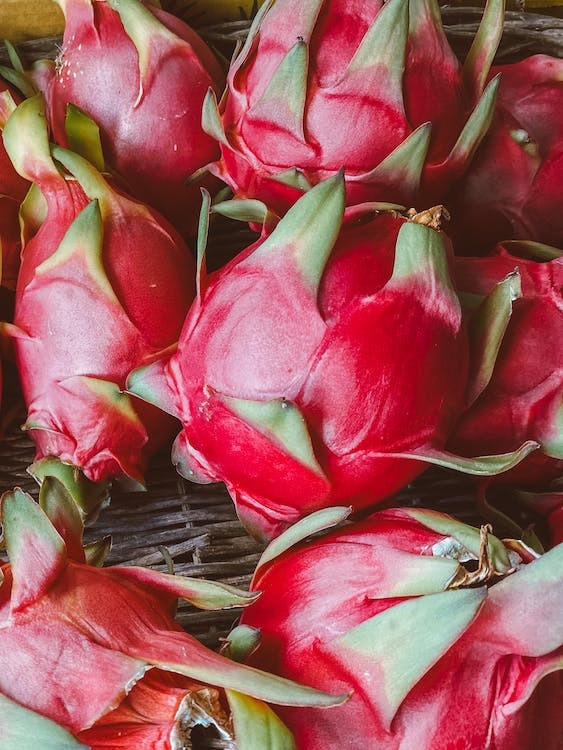
The process follows the same seven steps as any other certification, but each step is short. Many frozen fruit products contain exactly one ingredient — pitaya, pineapple, mango, blueberries — which means the raw material review resolves immediately.
Where additives are present, they are reviewed like any other ingredient. Common ones in this category include:
- Ascorbic acid and citric acid for color and preservation
- Sugar or syrup in sweetened packs
- Calcium chloride for texture
- Anti-caking or free-flow agents in IQF products
Each is straightforward, but each needs its own review and, in most cases, a supplier certificate.
03Which frozen fruits are the exception?
The exception is produce subject to insect infestation. Strawberries, raspberries, and certain other berries carry infestation exposure that can make certification either difficult or, in some operations, impractical.
Where certification is feasible, the review pays close attention to how the produce is cleaned at the processing facility — the wash sequence, the water pressure and temperature, the inspection method, and the rejection criteria. In some cases the assessment includes laboratory testing of samples.
This is not a blanket exclusion. It is a determination made against the specific facility, its cleaning process, and its verified results.
| Product type | Typical difficulty | Main question |
|---|---|---|
| Single-ingredient tropical fruit (pitaya, mango, pineapple) | Low | Facility standards |
| Stone fruit and melon | Low | Facility standards |
| Blueberries and cherries | Low to moderate | Cleaning process |
| Strawberries and raspberries | Higher | Infestation control and verification |
| Sweetened or syrup-packed fruit | Moderate | Sugar and additive certificates |
| Fruit blends and smoothie packs | Moderate | Every component reviewed |
04Does produce grown in Israel follow different rules?
Yes. Produce grown within the land of Israel is subject to an additional body of agricultural requirements that do not apply elsewhere, including tithing obligations and sabbatical-year considerations. Certification of Israeli-grown produce accounts for these separately.
For produce grown anywhere else, farming itself raises no certification concern, and the file begins at the processing facility.
05Frequently asked questions
Does frozen fruit need supervision on site?
Generally not on an ongoing basis. Minimally processed produce does not require the continuous supervision a meat or dairy facility does. Inspections are periodic.
Are frozen vegetables treated the same way?
Largely yes, with the same infestation consideration applying to leafy vegetables, broccoli, and similar produce.
What if my facility also processes other products?
Shared equipment is reviewed as it would be in any category. Dedicated freezing and packing lines make for the simplest file.
How fast can a frozen fruit product be certified?
Single-ingredient products frequently complete in the shortest end of EarthKosher’s range, often within a couple of weeks.
06Getting started
EarthKosher has certified frozen fruit companies including Wyman’s and Pitaya Foods. Request a quote or call (888) 312-3559.
Next step
Have your frozen fruit operation reviewed
Request a quote or browse our certification resources to see what a produce file involves.
Related reading
About the author. Rabbi Yehuda Goldman is CEO of EarthKosher Kosher Certification Agency, which certifies over 600 companies across more than 40 countries with a concentration in the natural and organic sector.
This article is general guidance on how frozen fruit is evaluated for kosher certification. Determinations on infestation controls and produce grown in Israel are made by your certifying agency against your actual sourcing and facility.