
If a retailer, distributor, or export partner has asked your team about religious certification, the first question is usually simple: what is halal and kosher certification, and are they basically the same thing? They are not the same, but they do share one practical purpose for brands – they help verify that products and production practices meet defined religious dietary standards in a way consumers can trust.
For manufacturers, that trust has real business value. Certification can open doors with new customers, support placement in specialty and mainstream retail, and reduce uncertainty for buyers who need clear documentation. But halal and kosher follow different religious frameworks, different review standards, and often different operational requirements. Treating them as interchangeable is where many companies lose time.
What is halal and kosher certification in practical terms?
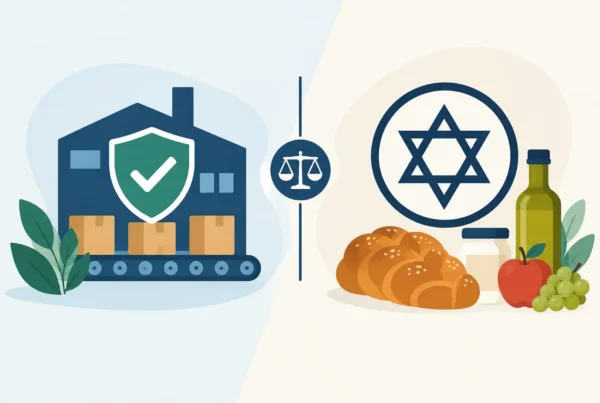
At the business level, halal and kosher certification are third-party verification systems. A certifying body reviews ingredients, processing methods, sourcing, production controls, and sometimes sanitation or changeover procedures to determine whether a product can be represented as compliant with religious dietary laws.
Kosher certification is based on Jewish dietary law, also called kashrut. Halal certification is based on Islamic dietary law. In both cases, the product itself matters, but so does how it is made. A formula that looks acceptable on paper can still fail certification if the facility, equipment, processing aids, or supply chain documentation do not meet requirements.
That is why certification is not just a label decision. It is an operational review.
Why brands pursue certification
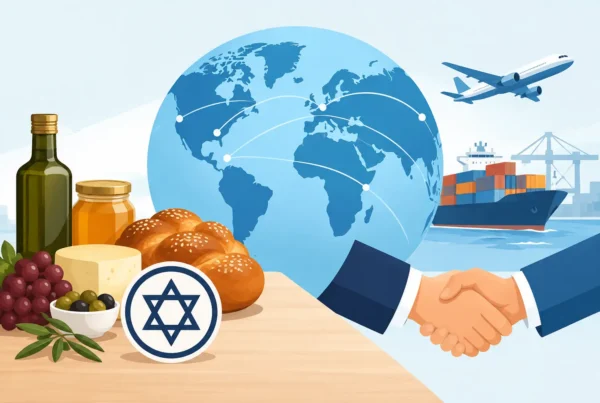
Some companies assume these certifications only matter if they are selling into narrowly defined religious markets. In practice, the audience is often broader. Certified products may be requested by retailers, foodservice operators, private label partners, export markets, and ingredient buyers that want predictable compliance standards.
Kosher certification in particular is widely recognized in the US food industry. Many consumers who purchase kosher-certified products are not strictly observant Jews. They may associate kosher approval with ingredient transparency, allergen awareness, or general quality controls. Halal certification can carry similar value in Muslim consumer markets and in global trade, especially in regions where halal compliance is expected or required.
For a growing brand, certification is often less about theory and more about access. If a customer requires it, understanding the path forward quickly matters.
How kosher certification works
Kosher certification starts with a review of ingredients, suppliers, formulas, and manufacturing processes. The certifier needs to know what goes into the product, where those inputs come from, and whether any ingredient already has an acceptable kosher status.
The next question is whether the production environment supports kosher compliance. That may involve evaluating shared equipment, previous production runs, sanitation methods, thermal processing, and whether kosher-sensitive materials are handled in the same plant. Some facilities need only documentation review and routine oversight. Others may require more specific controls or a formal kosherization process before approval can be granted.
The details depend heavily on the category. A shelf-stable beverage, a botanical ingredient, a flavor system, and a snack manufacturer can each present very different certification issues. Animal-derived ingredients, grape-derived ingredients, emulsifiers, enzymes, and processing aids often require close scrutiny.
Once approved, the company is authorized to represent covered products as kosher under the certifier’s symbol, subject to ongoing compliance. That ongoing piece matters. Certification is maintained through continued oversight, not granted once and forgotten.
How halal certification works
Halal certification also evaluates ingredients, sourcing, and production processes, but the underlying standards differ. In general terms, halal products must avoid prohibited substances and must be made in a way consistent with Islamic dietary requirements.
A common issue is ingredient origin. Gelatin, enzymes, emulsifiers, flavor carriers, and other compound ingredients can raise halal questions if their sources are unclear or derived from non-halal animal materials. Alcohol content or alcohol use in processing may also become a major review point depending on the standard being applied and the product type.
For meat and poultry, halal certification usually involves additional slaughter-related requirements. For many packaged foods, beverages, supplements, and ingredient systems, the review centers more on formulas, source documentation, contamination risks, and plant controls.
As with kosher, the label depends on both the formula and the process. A compliant ingredient deck is only part of the picture.
Halal vs. kosher: where they overlap and where they do not
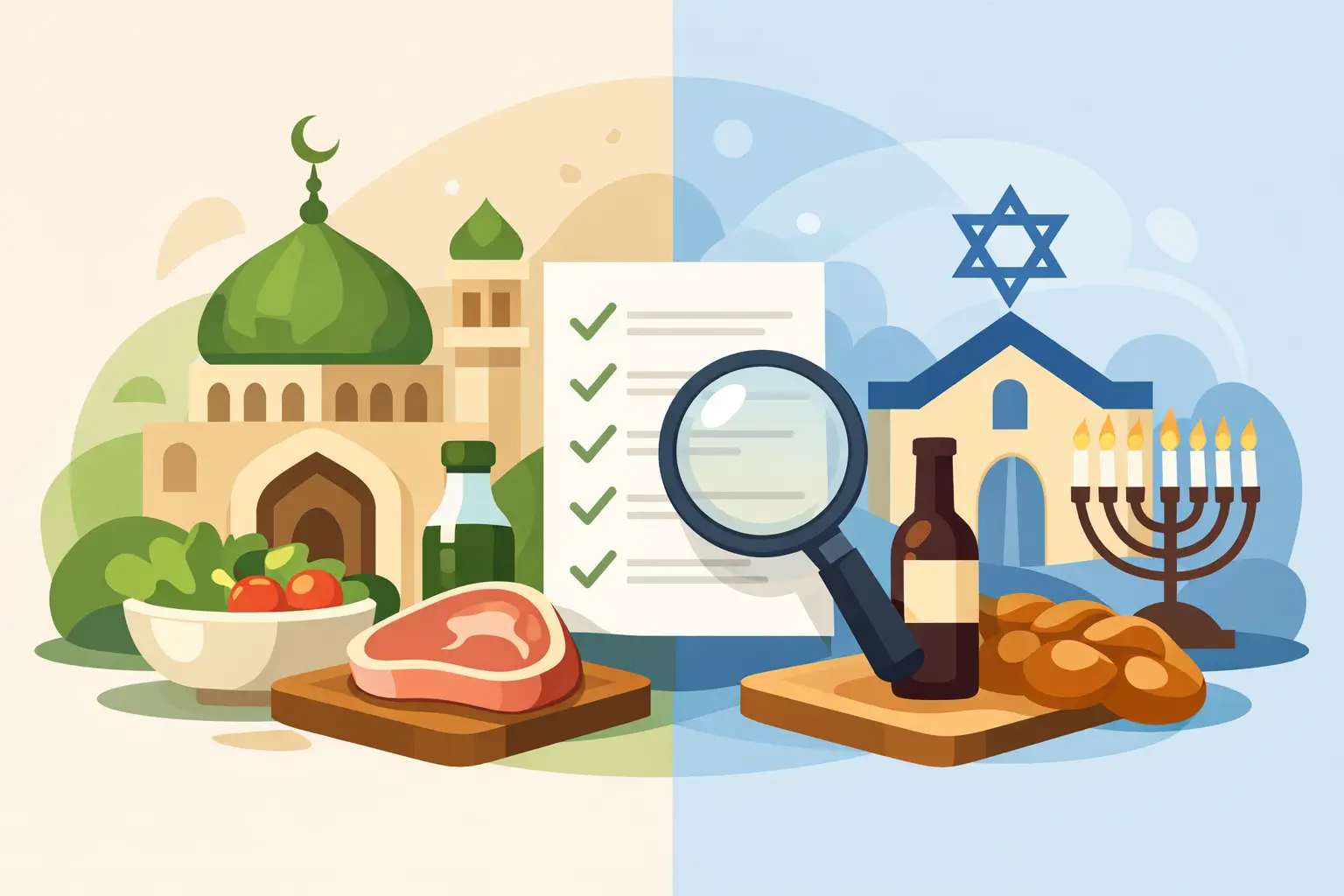
This is where companies often want a quick yes-or-no answer. There is some overlap, but not enough to assume that one certification substitutes for the other.
Both systems restrict certain ingredients and care deeply about traceability, contamination prevention, and credible third-party review. Both may require scrutiny of compound ingredients, processing aids, and shared equipment. Both can affect sourcing decisions and plant procedures.
But the standards are not identical. Some ingredients that may be acceptable in one system may not be acceptable in the other. The treatment of alcohol, meat sourcing, slaughter rules, dairy and meat interactions, and certain derivative ingredients can vary significantly. Kosher also includes detailed classification concepts such as meat, dairy, and pareve that do not map neatly onto halal categories.
So if a buyer asks whether your kosher-certified product is automatically halal, or the reverse, the honest answer is no. It depends on the product, ingredients, process, and the standards of the certifying body.
What companies should review before applying
Before pursuing either certification, it helps to gather the information a certifier will ask for early. That usually includes finished product formulas, raw material specifications, supplier information, process flow details, cleaning procedures, labels, and a list of manufacturing locations.
It is also wise to look beyond your primary ingredients. Minor inputs often cause delays. Processing aids, anti-foams, lubricants, release agents, alcohol-based carriers, and co-manufacturing arrangements can all affect eligibility. If you have multiple SKUs, private label products, or frequent formula changes, those details should be surfaced up front rather than fixed later.
This is one reason smaller and midsize brands benefit from a certifier that explains requirements in plain language. The process moves faster when everyone understands what is being reviewed and why.
Cost, timing, and complexity
Businesses rarely ask only what certification means. They also want to know how much work it will create.
The answer depends on the product category and facility profile. A straightforward operation using already approved ingredients may move relatively quickly. A plant with shared lines, international suppliers, custom compounds, or animal-derived inputs may need a more involved review.
Cost can also vary based on the scope of products, the number of sites, and the level of oversight required. The cheapest path is not always the best if it creates delays, poor communication, or market acceptance issues later. On the other hand, companies should not have to navigate unnecessary bureaucracy to get an accepted certification.
That balance matters. A good certifier helps you understand what is required, where the likely issues are, and what can realistically be done to keep the process affordable and manageable.
Choosing the right certification partner
If your business is considering halal, kosher, or both, the certifier should be able to do more than issue a symbol. You need a partner who can explain the standards clearly, identify operational gaps early, and respond quickly when your team has sourcing or labeling questions.
That is especially true for companies in food, beverage, ingredients, transportation, and natural products, where production realities can change fast. New suppliers come in. Formulas evolve. Customer deadlines tighten. A certifier that combines accepted standards with practical guidance can save a great deal of frustration.
For brands seeking kosher certification, agencies such as EarthKosher are often chosen because they make the process understandable and doable without losing credibility in the marketplace. That combination of acceptance, responsiveness, and cost awareness is not a small detail. It can determine whether certification becomes a growth tool or just another stalled project.
The real answer to what is halal and kosher certification
For consumers, halal and kosher certification signal trust. For manufacturers, they are structured compliance systems tied to ingredients, production, documentation, and market access. They are similar enough that people compare them, but different enough that each deserves its own review.
If certification is on your roadmap, the most useful next step is not guessing whether your product probably qualifies. It is getting a clear, product-specific assessment early, while there is still time to make smart sourcing and process decisions.