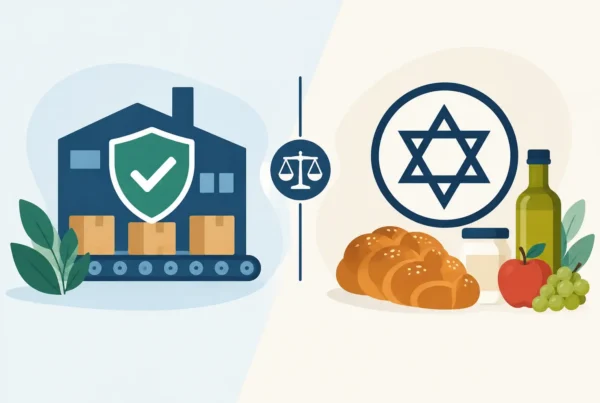


A retailer, distributor, or private-label prospect may ask one question that changes a startup’s launch plan: “Is this product kosher certified?” For a growing food, beverage, ingredient, or natural product company, the best kosher options for startups are not simply about placing a symbol on a label. They are choices that protect product integrity, fit the budget, and make expansion more achievable.
Kosher certification can support access to consumers and commercial partners who expect an accepted certification. It can also bring welcome discipline to formulation, sourcing, manufacturing, and documentation. The right path depends on what you make, where it is made, what is in it, and where you want the business to go next.
Why kosher certification belongs in startup planning
For an early-stage brand, every operational decision has a cost. Changing an ingredient after packaging has been designed, discovering a supplier cannot provide necessary information, or delaying a retail submission can be expensive. Considering kosher requirements before production begins gives founders more room to make smart choices.
Kosher certification is especially relevant when a product will be sold through specialty retail, mainstream grocery, online marketplaces, institutional channels, or export markets. It can help a brand meet a buyer requirement, speak to kosher-observant consumers, and provide added assurance to shoppers who associate kosher standards with careful oversight.
That does not mean every startup needs certification on day one. A local business with a very limited product run may decide to wait. But if the company expects to scale, work with distributors, enter larger retail channels, or manufacture for other brands, starting the conversation early is usually the more affordable and manageable choice.
Best kosher options for startups: start with the product
The most practical certification option begins with an honest review of the product itself. Kosher status is not determined by a short list of “good” or “bad” ingredients. A seemingly simple product can raise questions because of processing aids, flavors, emulsifiers, release agents, equipment, or the production history of a shared facility.
Choose formulations with transparency in mind
Startups often move quickly from prototype to production, relying on co-manufacturer recommendations or ingredients that are readily available. That approach can work, but it is wise to ask for full ingredient specifications and supplier details before finalizing the formula.
Plant-based products, for example, may appear straightforward but can still include flavors, enzymes, oils, or processing components that need review. Products containing dairy, meat-derived ingredients, wine-related ingredients, gelatin, or certain enzymes generally require additional attention. A product may qualify as pareve, dairy, or another kosher designation based on its ingredients and how it is produced.
The operational lesson is simple: do not make label claims based on assumptions. Have the formula and manufacturing process reviewed before printing labels or committing to a production schedule.
Consider an ingredient-first strategy
For ingredient companies, obtaining kosher certification for a raw material or finished ingredient can create value beyond one customer relationship. Many food and beverage manufacturers look for certified ingredients because they simplify their own sourcing and certification work.
This route can be particularly useful for oils, sweeteners, flavors, botanical ingredients, supplements, functional blends, and other materials used in multiple finished products. The certification scope should match what the company actually manufactures and sells. Certifying a broader range than necessary can add complexity, while certifying too narrowly may create delays when new stock keeping units are introduced.
Evaluate the manufacturing facility early
A startup does not always own its production facility. Many work with co-manufacturers, shared commercial kitchens, or contract packers. That is normal, but the facility’s processes matter as much as the recipe.
A facility may be a strong fit if it already keeps organized production records, can provide ingredient documentation, and is willing to coordinate around certification requirements. If equipment is shared with products that have different kosher considerations, the certifying agency will evaluate the situation and determine what is needed. Sometimes the solution is straightforward. Other times, a different production arrangement or a carefully planned production schedule makes more business sense.
Before selecting a co-manufacturer, ask whether it has experience supporting kosher-certified production and whether it will cooperate with documentation and inspections. This question can prevent a difficult surprise after a formula is complete.
Select a certification partner built for your stage
The certification agency you choose should be accepted by the customers and markets you are targeting. Acceptance is essential, but a startup should also look at responsiveness, clarity, cost structure, and the agency’s ability to explain requirements in business terms.
Large organizations may have established systems, but smaller brands can find themselves waiting for answers when a formula changes or a production date is approaching. A more client-centered agency can be a better fit when direct access to knowledgeable staff and rabbinic consultation matters.
EarthKosher works with growing companies that need an understandable and doable process, including brands in food, beverage, ingredients, transportation, and natural products. The goal is not to make certification feel mysterious. It is to identify the requirements, explain the steps, and help the company move forward without unnecessary bureaucracy.
Ask direct questions about timing and cost
Certification costs vary because products, facilities, ingredient sources, and production practices vary. Be cautious of anyone who offers a meaningful price without first understanding your operation. At the same time, a startup deserves a clear explanation of what affects cost and what services are included.
Ask how the agency handles new products, formula changes, supplier changes, facility inspections, and label approval. Ask who will respond when an urgent operational question comes up. Speed matters, but it should come with careful review rather than shortcuts.
A good certification partner will explain what is required in plain language and help you distinguish between an issue that needs action now and one that can be planned for later.
Prepare the information that keeps certification moving
Certification is faster when the brand begins with organized records. Founders do not need to become kosher law experts, but they do need to provide complete and accurate information.
Gather these materials before the initial review:
- A complete ingredient list for every product, including sub-ingredients, flavors, processing aids, and carriers.
- Supplier names, product specifications, and current kosher documentation when available.
- A clear description of where and how each product is manufactured, packed, stored, and transported.
- Draft labels, packaging claims, and a list of all products or sizes planned for certification.
If the business uses a co-manufacturer, involve that partner early. The fastest projects are often the ones where the brand, manufacturer, and certification agency communicate clearly from the beginning. Waiting until the final week before a production run creates pressure for everyone and may limit the available options.
Build certification into growth, not just compliance
The most effective startup approach is to treat kosher certification as part of commercial planning. Include it when developing a new product, onboarding a supplier, changing a facility, and preparing for a buyer presentation. That does not mean every minor adjustment requires a complete restart. It means changes should be reviewed before they create a compliance problem.
For brands with several products, it can help to map which items share ingredients, equipment, suppliers, and facilities. This reveals where a single supplier change could affect multiple certified products. It also helps operations teams create repeatable procedures as the company adds new team members.
There are trade-offs. A highly specialized ingredient may be perfect for taste or performance but difficult to document. A low-cost co-manufacturer may have limited flexibility around scheduling or equipment. A startup should weigh these factors against the value of certification and its growth goals rather than choosing based on price alone.
Kosher certification should give a growing company more confidence, not another source of confusion. Begin with the formula, choose manufacturing partners who can cooperate, and work with a certifier that treats your questions as part of the process. When certification is planned early and managed clearly, it becomes one more practical way to prepare your brand for the opportunities ahead.