
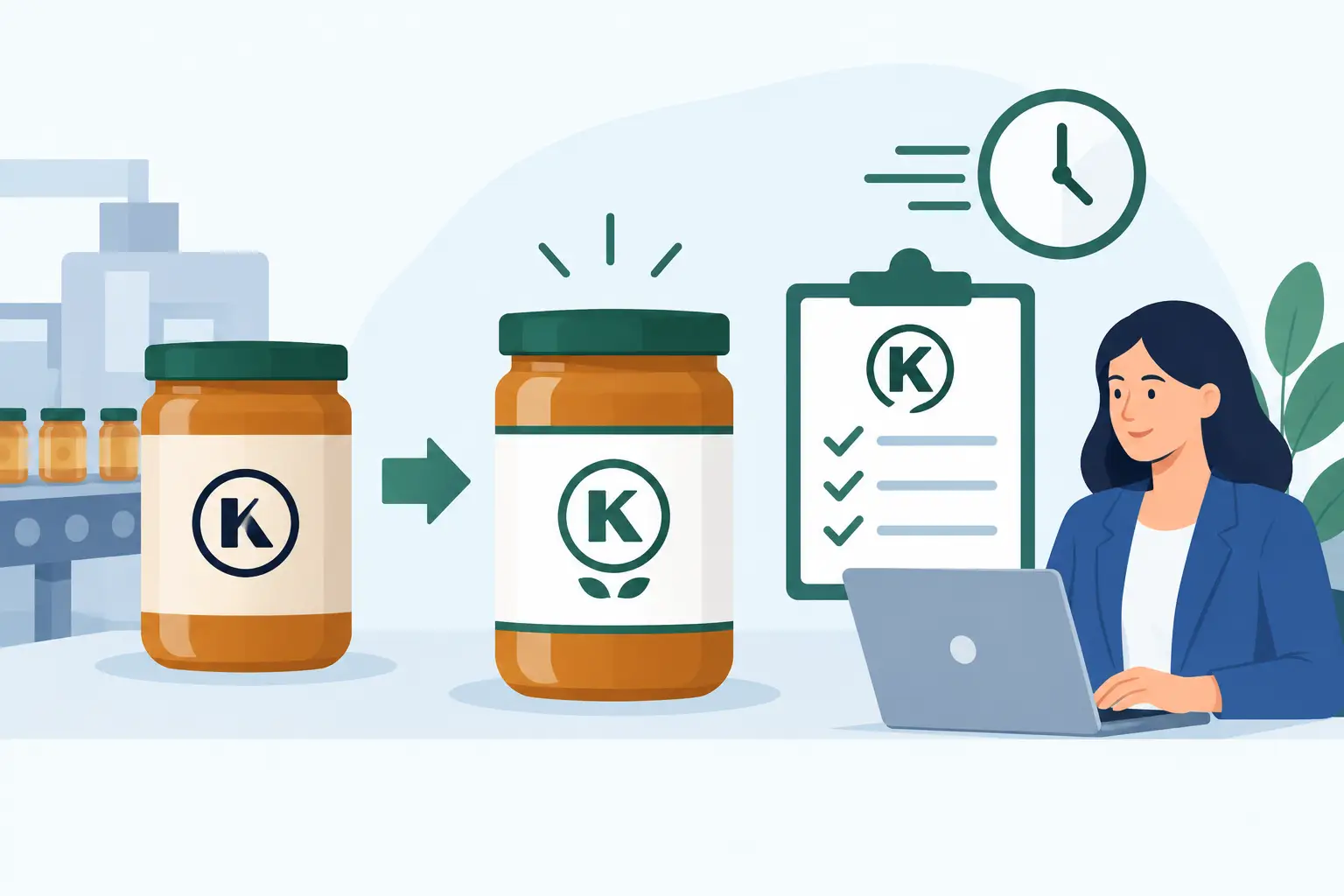
A label revision can look minor on a screen: a new flavor name, an updated ingredient statement, a different co-packer address, or a refreshed package design. For a kosher-certified product, that same revision may affect what can appear next to the kosher symbol and whether the product remains approved as labeled. The most reliable way to manage kosher label changes is to involve your certification agency before artwork is finalized, not after packaging has been ordered.
This is not about adding unnecessary steps to an already busy launch calendar. It is about protecting your certification, avoiding costly reprints, and making sure your finished package accurately represents the product inside. A clear review process gives product developers, operations teams, and brand managers a practical path forward.
Why kosher label changes need review
Kosher certification applies to specific products, ingredients, manufacturing arrangements, and facilities under defined conditions. The label is the public-facing expression of that approval. When a product changes, the label may need to change too. When the label changes, the certification agency needs to confirm that the kosher designation and symbol are still being used correctly.
Some changes are clearly significant. A new ingredient, a reformulation, a new flavor, or a different manufacturer can affect kosher status and must be reviewed. Other updates may seem purely cosmetic, such as moving the symbol to another panel or changing its size. Even then, approval matters because the symbol must be clear, accurate, and associated with the correct product.
The key distinction is simple: a package design is not automatically approved just because an earlier version was approved. Treat each new or revised label as part of your ongoing certification compliance process.
Which changes should trigger a kosher review?
When in doubt, ask before printing. Early communication is faster and less expensive than correcting inventory after the fact. Your certification contact can tell you whether a proposed change requires full product review, label review only, or no additional action.
A review is generally needed when you change the ingredient statement, supplier, processing aid, flavor system, allergen declaration, product name, net contents, manufacturer or distributor information, facility, co-packer, or country of origin. It is also needed when you introduce a new SKU, package size, variety pack, seasonal format, or private-label version.
Claims and product descriptions can deserve a closer look as well. Terms such as dairy, pareve, Passover, vegan, plant-based, or non-dairy do not all mean the same thing, and they should not be used as substitutes for kosher guidance. A product may meet one marketing definition without meeting the requirements associated with a particular kosher designation.
Artwork-only changes still deserve attention if they alter the kosher symbol, symbol placement, product identity, or the wording near the certification statement. A brand refresh may be straightforward, but approval should not be assumed.
Common changes that create avoidable problems
The most common issue is a reformulation that moves faster than label approval. A purchasing team approves a new supplier, or a developer substitutes an ingredient to address cost or availability, while the packaging team continues using approved artwork. The product may be commercially ready, but its kosher status needs confirmation before production and distribution.
Another frequent problem is reusing an approved symbol file on a related item. A certified original flavor does not automatically make a new flavor, format, or formula certified. Similar packaging can make this mistake easy to miss, particularly when multiple products are being developed at once.
Co-packer changes also require prompt communication. Even if the formula is unchanged, a different facility may use different equipment, materials, sanitation procedures, or production scheduling. The certification agency needs the opportunity to evaluate the new arrangement before the symbol appears on products made there.
A practical process to manage kosher label changes
The best process is simple enough that your team will actually use it. Build kosher review into your existing product-change and artwork-approval workflow rather than treating it as a separate, last-minute task.
1. Flag the change at the start
As soon as a change request is opened, identify whether it affects formula, sourcing, production, product naming, claims, or packaging. Give one person – often a regulatory, quality, operations, or brand lead – responsibility for notifying the certification agency.
This early flag prevents a common bottleneck: discovering a certification question after design files have been released to the printer. It also gives your rabbinic contact time to ask focused questions while suppliers and internal teams are still readily available.
2. Submit complete, current information
A fast review depends on complete information. Share the proposed artwork along with the details behind the change. For a formula revision, provide the updated ingredient list and specifications for any new ingredients or processing aids. For a co-packer change, provide the facility details and the expected production arrangement. For a new product, include the formula, process overview, and packaging concept.
Do not rely on an old spreadsheet, outdated specification, or verbal assurance from a supplier. Ingredient and facility details can change over time. Current documents allow the review to move forward with fewer follow-up questions.
3. Keep the symbol exactly as approved
Use the current authorized kosher symbol artwork supplied or approved by your certification agency. Do not redraw it, stretch it, alter its proportions, change it into a decorative element, or place it where consumers may associate it with an uncertified product.
If a product has a special designation, such as dairy or pareve, use only the designation that has been specifically approved. This is especially important for multipacks, display cartons, online images, and packaging with several flavors. Every format should accurately reflect the certification status of the products it contains.
4. Obtain written approval before printing
Verbal conversations are useful for direction, but written label approval is the practical record your team needs. Keep the approved PDF, email confirmation, or formal approval document with your artwork files and product records.
Set a firm internal rule: no print release until the kosher review is complete. For urgent launches, tell your certification contact the timing and production date. Responsive communication can help, but urgency does not replace the information needed for a proper review.
5. Verify the first production run
Before a large run ships, compare the final printed package with the approved artwork. Check the product name, ingredient statement, symbol, designation, and manufacturing information. This small final check can catch printer substitutions, version-control errors, and last-minute changes that were not part of the approved file.
If the actual package differs from what was approved, pause and ask for guidance. The right next step depends on the difference, the amount produced, and whether the change affects kosher status or symbol use.
Build label review into your change-control system
Growing brands benefit from a simple change-control checklist. It does not need to be complicated. The purpose is to ensure that formula, supplier, facility, and artwork changes reach the right people before a decision becomes expensive.
Your checklist should name the internal owner, the certification contact, the documents required for review, and the final approval record. It should also cover packaging inventory. If old labels remain in storage after a formula or certification change, your team needs a decision about whether they can still be used, need an over-label, or should be retired.
For companies with frequent launches, establish a regular communication rhythm with your certification agency. Sending changes in organized batches can help, but do not hold back time-sensitive reformulations simply to wait for the next batch. The right approach depends on your product pipeline and production schedule.
What to do when a change is urgent
Supply disruptions happen. A key ingredient becomes unavailable, a retailer moves up a launch date, or a co-packer has a sudden capacity issue. In these moments, speed comes from clear communication, not from bypassing approval.
Contact your certification agency immediately and explain what changed, when production is scheduled, and what documents are available. Be direct about deadlines. Then provide complete specifications and proposed artwork as quickly as possible. An agency that understands the pressures facing growing businesses can help clarify the path forward, but it cannot responsibly approve information it has not received.
If approval cannot be completed before your deadline, consider operational alternatives. You may be able to delay the print run, use previously approved packaging for an unchanged product, or adjust the launch sequence. The best option depends on the product and the nature of the change. What matters is avoiding an unapproved symbol on finished goods.
Make compliance easier as your brand grows
Kosher certification should support market access and consumer confidence, not become a source of confusion for your team. EarthKosher works with businesses to make requirements understandable and doable, with direct guidance when questions arise. The most successful clients do not try to become experts in every certification detail. They create a dependable habit of asking before changing.
When product development, purchasing, quality, and marketing share that habit, label review becomes a normal part of launching well. A quick conversation before artwork is released can protect your packaging investment, your certification status, and the trust customers place in your brand.