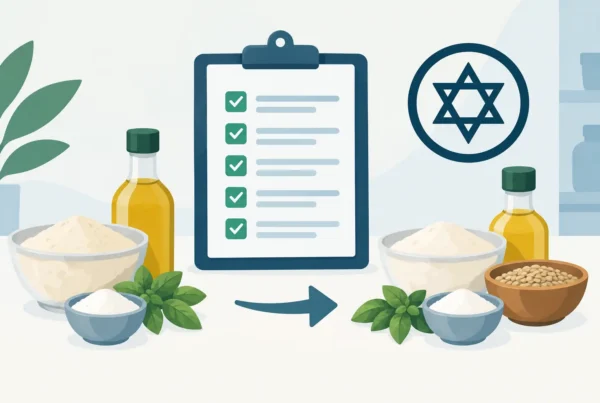


A capsule can look simple on a Supplement Facts panel while raising several kosher questions behind the scenes. Are supplements kosher? Some are, but a product’s vitamins or minerals alone do not answer that question. The source of ingredients, processing aids, capsule material, flavors, shared equipment, and manufacturing controls can all affect whether a supplement qualifies for kosher certification.
For brands, the practical issue is not whether a formula appears wholesome or plant-forward. It is whether the finished product can be verified against kosher requirements and represented to retailers and consumers with an accepted kosher symbol. That distinction matters when pursuing new sales channels, responding to distributor requests, or building trust with kosher-conscious shoppers.
Are Supplements Kosher by Default?
No. Supplements are not kosher by default, even when they are labeled vegan, non-GMO, organic, or free from major allergens. Those claims can be useful for a consumer, but they do not review the same questions as kosher certification.
A basic vitamin blend may contain ingredients that are inherently straightforward, yet still include a flavor system, coating, lubricant, or encapsulation ingredient that requires review. A botanical powder may be plant-based, but its processing method, extraction solvent, or production equipment may need to be evaluated. The same is true of probiotic, protein, collagen, electrolyte, and specialty nutrition products.
Kosher status is determined through a review of the full supply chain and manufacturing process. The product label is a starting point, not a final answer.
What Makes a Supplement Kosher or Not Kosher?
Kosher certification examines both ingredients and how those ingredients become a finished product. This is why companies should involve a certifying agency early in formulation or before a packaging run, rather than waiting until a retailer asks for documentation.
Ingredient sources matter
Certain ingredients deserve closer attention because they may be derived from animal, dairy, fish, grape, or other sources that require specific kosher oversight. Gelatin is a familiar example. It may be sourced from non-kosher animals, kosher animals processed under appropriate conditions, fish, or plant-based alternatives. The name “gelatin” on a specification sheet does not provide enough information on its own.
Other ingredients can be less obvious. Amino acids, enzymes, glycerin, stearates, omega oils, natural flavors, color systems, and vitamin carriers may have source or processing considerations. A powder blend that looks entirely plant-based may use a processing aid not listed on the final label. For kosher review, these details count.
Capsules, softgels, and coatings need review
The delivery format often creates the first certification challenge. Hard-shell capsules may be made from gelatin or from vegetarian alternatives such as cellulose-based materials. Softgels frequently use gelatin, glycerin, and plasticizers, each of which must be evaluated.
Tablets can also include coatings, binders, lubricants, and anti-caking agents. Gummies may contain gelatin, pectin, flavors, and colors with different certification implications. There is no universal rule that one format is kosher and another is not, but each format requires documentation and review.
Manufacturing conditions can change the answer
Even when every ingredient is acceptable, the facility and equipment still matter. A contract manufacturer may produce products with dairy ingredients, non-kosher gelatin, fish oils, or other materials on shared lines. The certifier will evaluate the equipment, cleaning procedures, production sequence, and any necessary kosherization steps.
This does not mean a facility must be dedicated to one type of product to obtain certification. Many manufacturers successfully produce kosher-certified supplements in multi-product facilities. It does mean that the production reality must be understood and managed. Clear records and dependable controls make the process faster and more workable.
Common Supplement Categories That Need Extra Attention
Every product is reviewed individually, but some categories tend to involve more questions during kosher certification.
Collagen and gelatin-based products require source verification. Fish oil and marine collagen need review of the fish species and processing. Probiotics and enzymes may involve growth media or fermentation inputs that require documentation. Protein powders can raise dairy, equipment, and flavor questions. Gummies and chewables combine multiple sensitive components, including gelatin or pectin systems, flavors, colors, and release agents.
Herbal extracts and botanicals are often more straightforward than animal-derived ingredients, but they are not automatically approved. Extraction methods, carriers, standardization ingredients, and shared equipment still need to be considered. The same principle applies to vitamins and minerals: the active ingredient may be acceptable while a carrier or blend component needs further verification.
For brands with a large product line, it is helpful to identify formulas that share ingredients, capsule types, and manufacturing lines. That organization can reduce repeated work and help the certification review move efficiently.
Why a Kosher Logo Is Different From a Supplier Letter
A supplier may state that an ingredient is kosher, and that documentation can be valuable during the review. However, an ingredient statement alone does not certify the finished supplement. It does not account for every ingredient in the formula, the production equipment, the facility’s procedures, or changes made after the ingredient was purchased.
Likewise, a brand should not assume that a product can carry a kosher claim simply because all of its individual components appear acceptable. An accepted kosher symbol represents an ongoing certification relationship, not a one-time opinion based on a label.
This is especially relevant for brands selling through natural grocery, specialty retail, e-commerce, or distribution networks where buyers may request recognized certification. A clear kosher designation gives purchasers and consumers a practical way to evaluate the product without having to investigate every ingredient themselves.
How Brands Can Prepare for Kosher Certification
Preparation does not need to be complicated, but it should be thorough. The fastest path is usually the most organized one: provide complete information early, ask questions before changing suppliers, and keep formula records current.
Start by gathering your current formula, finished product specifications, labels, and a complete list of ingredients. Include processing aids, flavors, capsule or softgel specifications, and packaging components that contact the product when relevant. You will also need the names of ingredient suppliers and manufacturing locations.
Next, review your production setup. If you use a contract manufacturer, ask what other products run on the same equipment and whether the facility has existing kosher controls. If you manufacture in-house, document cleaning practices, line scheduling, storage, and receiving procedures. A good certification partner will explain which details matter and which ones do not, so your team can focus on useful action rather than paperwork for its own sake.
Finally, build kosher review into your change-control process. A new flavor supplier, reformulated gummy base, different softgel shell, or alternate contract manufacturer can affect certification. Not every change creates a problem, but reviewing it before production protects your certification status and prevents costly relabeling or inventory delays.
The Business Value of Kosher Certification for Supplements
Kosher certification serves a religious consumer need, but its value can extend beyond that audience. Many shoppers see an accepted kosher symbol as a sign of disciplined ingredient oversight and clear manufacturing controls. For retailers and distributors, it can also help a product meet a specific purchasing requirement or reach customer segments that expect certification.
The opportunity is strongest when certification supports a real business objective: entering a new account, strengthening a natural products line, responding to export needs, or improving consumer confidence. It may not be necessary for every brand at every stage, particularly if there is no retailer, distributor, or customer demand. But when kosher is part of the growth plan, treating it as an early operational decision is usually more affordable and less disruptive than addressing it after products are already on shelves.
EarthKosher works with supplement and natural product companies that need an understandable, accepted path to certification. The right process should feel practical: clear requirements, responsive answers, and guidance that respects the pressures of formulation, production schedules, and cost control.
A supplement does not become kosher because its marketing sounds clean. It becomes certifiable when the ingredients, equipment, and controls can be reviewed with confidence. Starting that conversation before the next formula change can give your team more choices, fewer surprises, and a stronger foundation for growth.