
A retailer asks for a current kosher certificate. A distributor wants proof of gluten-free controls. A customer scans a package for organic verification before putting it in the cart. For growing companies, choosing the best certifications health food brands need is not a matter of collecting logos. It is a practical decision about market access, production controls, consumer confidence, and the claims your business can support.
The right certification can help a product move into new channels and answer buyer questions quickly. The wrong one, or one pursued before the operation is ready, can create added expense and delays. A smart approach starts with your product, ingredients, manufacturing process, and sales goals.
Why certifications matter in the health food aisle
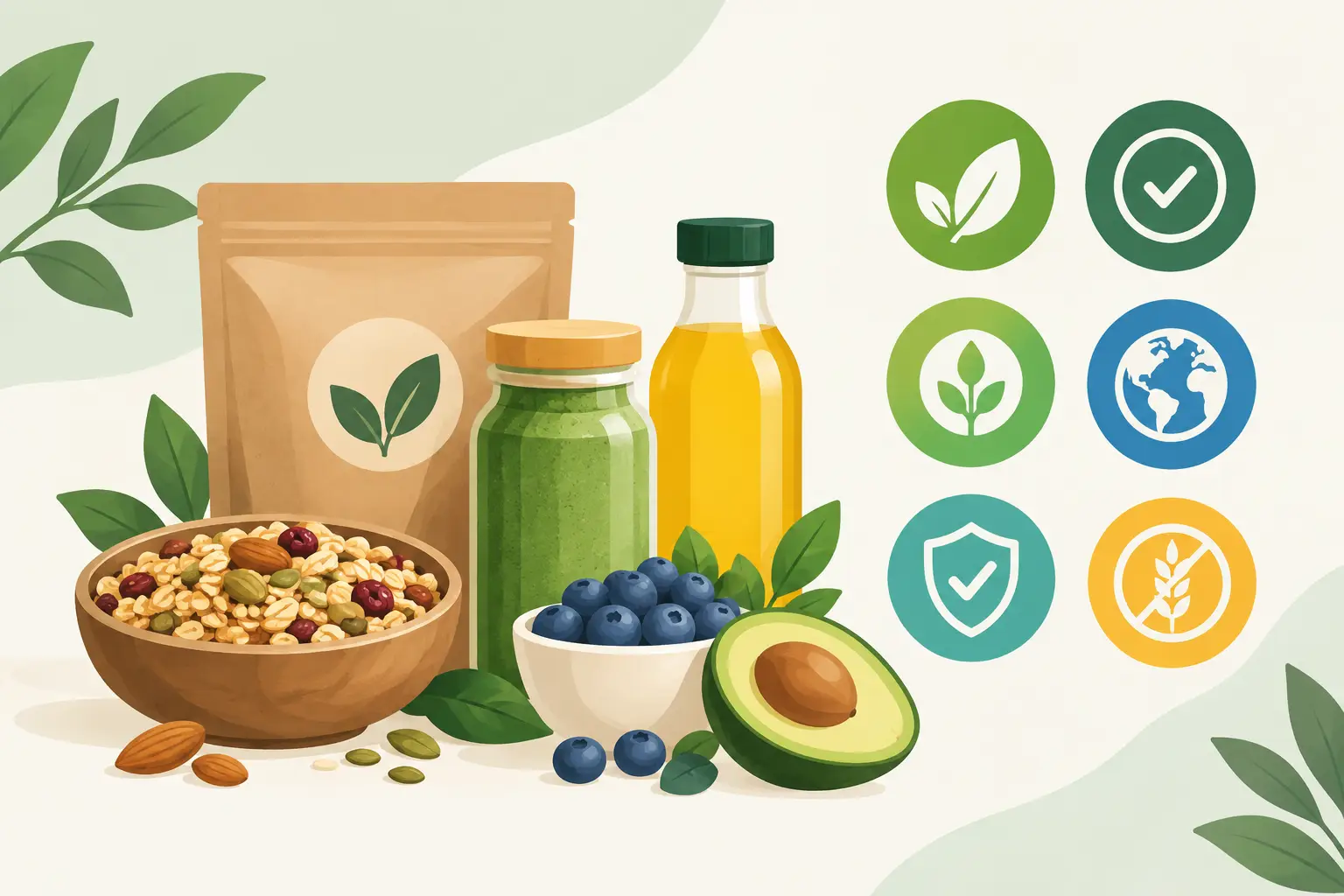
Health-focused shoppers are often looking for reassurance, not just an attractive ingredient panel. They may want confirmation that a product is kosher, organic, vegan, non-GMO, allergen-conscious, or free from gluten. Retail buyers and distributors also use certifications to reduce risk. A credible third-party standard gives them a clearer basis for evaluating a brand’s claims and controls.
That does not mean every health food product needs every available certification. A simple fruit snack may benefit most from organic and kosher certification, while a plant-based protein powder may need greater attention to vegan, allergen, gluten-free, and kosher requirements. The strongest certification plan is specific to the product and the customer you want to reach.
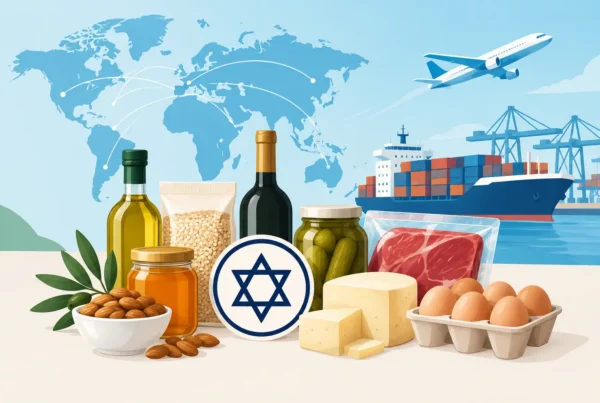
For many brands, kosher certification deserves early consideration. Kosher consumers rely on the symbol, but its value extends beyond a single consumer group. Many retailers, distributors, institutions, and export markets recognize kosher certification as a useful indicator of ingredient review and ongoing oversight. It can also support product positioning for shoppers seeking products with clear standards.
Best certifications health food brands should evaluate
Kosher certification
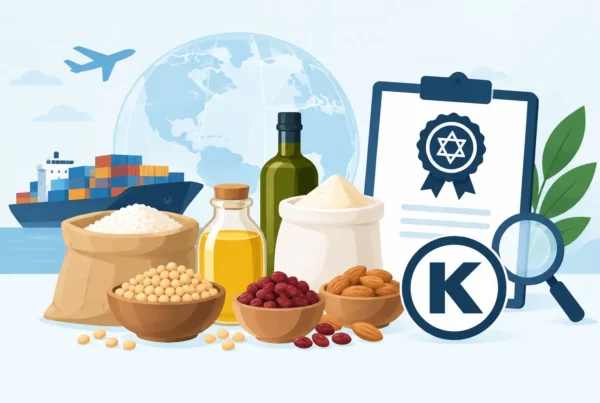
Kosher certification verifies that ingredients, processing aids, equipment, and production practices meet kosher requirements. It is not simply a review of the finished product. A certification agency evaluates the full supply chain and manufacturing context, including ingredient documentation, shared equipment, production scheduling, and, when applicable, facility visits.
This level of review can be especially relevant for health food brands using complex natural ingredients. Flavors, enzymes, oils, cultures, botanical extracts, and processing aids may have sourcing details that are not obvious from a basic specification sheet. A kosher agency can identify questions early, before packaging is printed or a retailer has requested documentation.
Kosher status also has useful distinctions. A product may be pareve, dairy, or meat, and that classification affects how consumers use it. Brands making plant-based foods often want pareve status, but plant-based does not automatically mean pareve. Shared equipment, additives, and processing conditions still matter.
Organic certification
Organic certification can be a strong fit when a product’s agricultural ingredients and sourcing practices meet the applicable standard. For shoppers who prioritize farming methods and ingredient provenance, the organic seal is often one of the first package claims they recognize.
However, organic certification is not a shortcut to broader health positioning. It does not confirm that a product is gluten-free, vegan, kosher, low in sugar, or free of allergens. It also requires disciplined documentation and supply-chain management. If you use multiple suppliers or frequently reformulate, maintaining compliant records should be part of the cost and operational planning.
Gluten-free certification
A gluten-free certification can help brands serve consumers with celiac disease, gluten sensitivity, or a personal preference to avoid gluten. The most valuable programs go beyond a front-label claim by establishing standards for ingredients, testing, sanitation, and cross-contact controls.
This certification is particularly worth evaluating for products made in facilities that also handle wheat, barley, rye, or ingredients derived from them. If your facility is dedicated and your products are inherently gluten-free, the path may be more straightforward. If production is shared, the question is not whether your recipe contains gluten alone. The question is whether your controls can reliably prevent unintended exposure.
Non-GMO verification
Non-GMO verification may fit brands whose customers are highly focused on ingredient sourcing, especially in categories containing corn, soy, canola, sugar, or other commonly scrutinized inputs. It can reinforce a clean-label strategy when the brand has reliable supplier documentation and a stable ingredient program.
The trade-off is that verification can add administrative work without being equally meaningful in every category. For a product made primarily from ingredients with little consumer concern about genetic engineering, buyers may place more value on another certification. Ask your retail partners and target customers what they actually look for rather than assuming a seal will drive every purchase decision.
Vegan and plant-based certification
A vegan certification confirms that products do not contain animal-derived ingredients and may examine manufacturing controls for cross-contact concerns. It can be helpful for brands selling into plant-based retail sets or serving consumers who expect clarity around ingredients such as flavors, colors, cultures, and processing aids.
Be careful not to treat vegan and kosher as interchangeable. They address different standards. A vegan product may not qualify as kosher, and a kosher product may contain dairy, eggs, fish, or other non-vegan ingredients. When both audiences matter, evaluate each claim separately and build processes that support both.
Allergen and food safety certifications
Allergen-related certification and recognized food safety programs serve different but equally practical functions. Allergen programs support clear controls for ingredients, segregation, sanitation, labeling, and cross-contact management. Food safety certification demonstrates that a facility has established systems for managing hazards, traceability, corrective actions, and documentation.
These may be essential for manufacturers pursuing larger retail accounts, co-manufacturing relationships, or institutional business. In many cases, food safety certification is less of a consumer-facing marketing tool and more of a commercial requirement. It can still protect the brand by making daily operations more consistent and easier to demonstrate to buyers.
Choose certifications in the right order
The most effective certification strategy starts with a gap assessment. Review your formula, supplier approvals, manufacturing location, shared equipment, labels, current documents, and planned sales channels. Then identify which claims are required, which are commercially useful, and which can wait.
For example, a brand preparing for a natural grocery launch may prioritize kosher and organic certification because those are meaningful to its category and retail targets. A snack manufacturer entering schools or healthcare accounts may need to place food safety and allergen controls first. A company selling direct-to-consumer may initially gain more from a certification its core audience recognizes than from a broad collection of seals.
Avoid putting certification marks on packaging before approval is complete. A label claim can affect print timelines, inventory, and retailer discussions, so it is better to confirm the exact scope of certification first. That includes each product, production site, brand name, and any required symbol or language.
Build certification into product development
Certification is easier and more affordable when considered before commercialization. Product developers should ask suppliers for current certificates and detailed specifications during ingredient selection, not after a formula is final. Operations teams should also identify shared equipment and potential processing conflicts before setting production schedules.
This preparation is especially valuable for kosher certification. A responsive agency can explain what documentation is needed, review potential issues, and help a brand understand a practical path forward. EarthKosher works with natural product companies that want accepted kosher certification without unnecessary complexity, including brands that need clear guidance through the approval process.
The best agency relationship is not just about receiving a certificate. It should give your team timely answers when a supplier changes, a new flavor is introduced, a co-manufacturer is added, or a retailer asks for updated documentation. Certification requirements do not stand still when your business grows.
Make each seal earn its place
A package crowded with symbols can confuse shoppers if the claims do not support a clear product story. Use certifications that reflect real controls and answer a real buyer or consumer need. Train your sales team to explain what each certification means without overstating it, and keep product files current so you can respond confidently to retailer requests.
When certification decisions are tied to your ingredients, operations, and intended market, they become more than a packaging feature. They become a practical foundation for selling with confidence as your brand reaches more shelves and more customers.