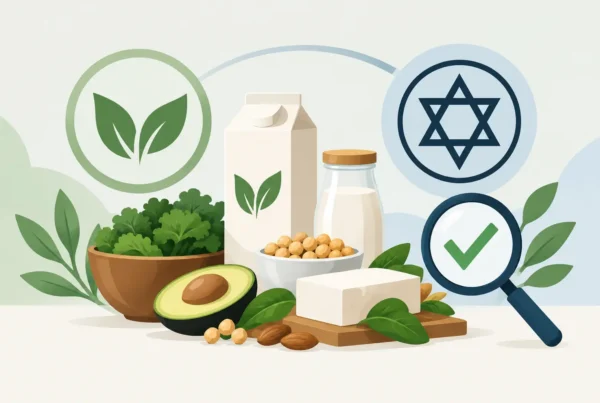


A buyer asks one simple question during a line review: Is it kosher certified? For many brands, that question decides whether the conversation moves forward or stalls out. That is one of the top reasons brands need kosher certification – not as a nice extra, but as a practical business requirement that can affect sales, distribution, and credibility.
Kosher is often misunderstood as relevant only to a narrow consumer group. In practice, it reaches much further. Retailers, distributors, co-packers, ingredient suppliers, and end consumers often view kosher certification as a trusted sign that a product and its manufacturing process have been reviewed by an independent third party. For growing brands, especially those trying to stay lean while opening new channels, that kind of trust can carry real weight.
Top reasons brands need kosher in commercial markets
For many companies, the first reason is simple: market access. Some retailers and distributors prefer or require kosher-certified products in certain categories. That can be especially true in food, beverage, ingredients, supplements, and natural products, where buyers are managing broad customer demand and want products that meet multiple purchasing preferences at once.
Kosher can also matter upstream. A manufacturer may need certified ingredients because its own customers require them. In those cases, certification is less about marketing language and more about staying qualified to supply the businesses that keep production moving. If one component in the chain lacks acceptable certification, it can create delays, reformulation costs, or lost opportunities.
This is where brands often discover that kosher is not only a label issue. It is an operational issue. A product may be high quality and fully compliant in other ways, but without kosher approval it may still be excluded from certain accounts or procurement programs.
Buyer confidence matters as much as consumer demand
Consumers do look for kosher symbols, but business buyers often drive the decision first. Category managers, private label teams, and procurement professionals are trying to reduce risk. A recognized kosher certification helps them feel more comfortable that ingredients, processing, sanitation controls, and documentation have been reviewed carefully.
That confidence matters even when the end consumer is not actively shopping for kosher. Many shoppers associate kosher certification with oversight, traceability, and consistency. It does not replace food safety programs or regulatory compliance, but it can complement them by adding another layer of external review.
For smaller brands, this can be especially valuable. Newer companies do not always have years of shelf history or deep brand recognition. Certification helps bridge that trust gap. It gives buyers and consumers one more reason to say yes.
Kosher supports a broader audience than many brands expect
One of the more practical top reasons brands need kosher is that it can serve multiple customer groups at the same time. Kosher-observant consumers may be the most obvious audience, but they are not the only one. Some vegetarian, dairy-avoiding, allergen-aware, halal-conscious, and label-reading shoppers also use kosher markings as part of how they evaluate products.
That does not mean kosher is a substitute for allergen statements, vegan claims, or halal certification. It is not. But in the real world, consumers often use several signals together when making purchase decisions. A kosher mark can help a product communicate more clearly on a crowded shelf.
Top reasons brands need kosher for growth beyond local sales
Expansion changes the equation. A brand selling through farmers markets, local stores, or direct-to-consumer channels may be able to operate for a while without kosher certification. Once that same brand starts approaching regional grocery chains, export partners, contract manufacturers, or larger distributors, the lack of certification can become a sticking point.
This is why growth-stage companies often pursue kosher sooner than they first planned. The move is not always driven by immediate consumer demand. Often it is driven by the next account, the next production partner, or the next geography.
International trade can make this even more relevant. In many export markets, kosher certification is familiar, recognized, and commercially useful. Brands looking to widen distribution may find that accepted kosher certification helps smooth conversations with importers and retailers that want products to meet broadly recognized standards.
There is a trade-off, of course. Certification requires documentation, facility review, ingredient verification, and ongoing compliance. Some companies worry the process will be costly, slow, or hard to manage. That concern is understandable. The practical question is whether the business gained from certification outweighs the internal effort required to maintain it. For many brands, the answer is yes, especially when the process is explained clearly and managed efficiently.
Kosher can strengthen supply chain discipline
Another reason brands pursue certification is that the process often brings helpful clarity to their supply chain. To become certified, companies need a clear understanding of ingredients, sources, processing aids, production methods, and facility procedures. That level of review can expose issues that were previously vague or handled informally.
For operations teams, this can be beneficial well beyond kosher itself. Better documentation, cleaner supplier communication, and tighter process controls tend to support stronger manufacturing discipline overall. Brands do need to be realistic here: kosher certification is not a catch-all operational system. But it can reinforce habits that reduce confusion and improve consistency.
This is particularly relevant for businesses with multiple SKUs, private label products, co-manufacturing relationships, or globally sourced ingredients. The more moving parts involved, the more valuable clear standards become.
Why accepted certification matters
Not all certification carries the same weight in the marketplace. Brands sometimes learn this after the fact, when a buyer asks whether the certifier is recognized by a specific retailer, distributor, or customer base. That is why one of the top reasons brands need kosher should be stated more precisely: brands need accepted kosher certification.
Acceptance matters because the value of the certification depends on whether the market recognizes it. A certificate that is technically valid but commercially weak may not solve the business problem that prompted the investment in the first place.
For that reason, companies should think carefully about their sales channels, target retailers, export plans, and ingredient customers before choosing an agency. Cost matters. Speed matters. Service matters. But acceptance in the real market matters just as much.
The business case is often stronger for small and midsize brands
Larger companies usually have internal compliance teams, regulatory staff, and more room in the budget to manage certification projects. Smaller brands often do not. That can make kosher feel intimidating at first.
Yet small and midsize companies often have the most to gain. They are usually working harder to prove credibility, open doors with buyers, and compete with established brands. A respected kosher certification can help level the playing field by giving those companies an additional credential that buyers understand immediately.
The challenge is making the process understandable and doable. If certification feels buried in bureaucracy, smaller businesses may delay it until they lose an opportunity. A more responsive, straightforward approach can make a significant difference. This is one reason many emerging companies look for a certifier that can explain requirements in plain language, move quickly, and stay accessible when questions come up.
Kosher is not automatic for every brand, but it is worth evaluating early
Not every company needs kosher right away. If your products are sold only in limited local channels and no buyer, distributor, or end consumer has raised the issue, certification may not be urgent this quarter. But waiting until a major opportunity appears can create avoidable pressure, especially if reformulation or supplier changes are needed.
A better approach is to evaluate kosher early, before it becomes a last-minute requirement. Ask whether your target retailers prefer it, whether your ingredients can qualify, whether export growth is part of your plan, and whether certification could help support brand trust. Those questions usually reveal whether kosher is a future consideration or a current priority.
For many food, beverage, ingredient, transportation, and natural product companies, the decision comes down to business practicality. If kosher certification helps you qualify for more opportunities, reassure buyers, support cleaner operations, and serve a wider market, it is no longer a niche discussion. It is part of building a brand that is ready for growth.
If you are weighing the next step, the most helpful place to start is not with assumptions about complexity. It is with a clear conversation about your products, your facility, and where you want the business to go.