

A buyer asks whether your product is kosher, a distributor requires an accepted symbol, or a retail account wants documentation before reviewing your line. These are ordinary business moments, but they can quickly expose a gap in a brand’s market readiness. The practical kosher certification benefits extend well beyond serving observant Jewish consumers: certification can strengthen buyer confidence, clarify ingredient controls, and help a growing company pursue opportunities that may otherwise remain out of reach.
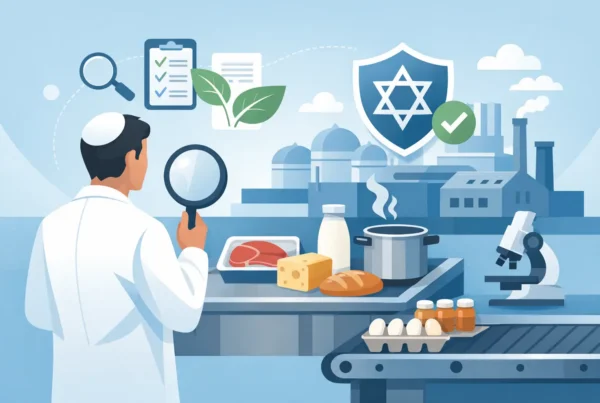
For food, beverage, ingredient, transportation, and natural product companies, kosher certification is not a label added at the end of product development. It is a verified program based on the ingredients, processing methods, equipment, suppliers, and facility practices behind the finished product. When the process is managed clearly, it becomes understandable and doable, even for companies with limited internal compliance resources.
1. Kosher certification benefits include broader market access
Kosher is frequently requested by retailers, distributors, foodservice operators, private-label customers, and export partners. In some cases, it is a stated requirement. In others, it gives a buyer one more reason to consider a product that is already competing for limited shelf space.
A recognized kosher symbol gives purchasing teams a simple way to confirm that a product meets a defined third-party standard. That can be especially valuable for ingredient suppliers. A manufacturer may need kosher-approved inputs to keep its own finished goods kosher, so it will often favor suppliers that can provide current documentation and reliable certification support.
The opportunity is not limited to one product category. Kosher certification can support placement for snacks, beverages, oils, flavors, supplements, personal care products, cleaning products, and many other items. The commercial value depends on your category, price point, customer base, and distribution goals. Still, certification removes a common objection before it appears.
2. It builds trust through independent verification
Consumers and commercial buyers rarely have time to investigate every ingredient source or production detail themselves. A kosher symbol communicates that an independent rabbinic authority has reviewed the relevant parts of the operation and that the company is maintaining the agreed-upon standards.
That matters to kosher consumers, who rely on accepted certification when making purchasing decisions. It can also resonate with shoppers who value transparent sourcing, careful oversight, and clear product claims. Kosher certification is not a substitute for organic, non-GMO, allergen-free, vegan, or other claims. Each program has its own rules. But for brands that already take quality and ingredient integrity seriously, kosher can reinforce a broader message of accountability.
Trust is built through consistency. The symbol must appear only on approved products, and product changes must be communicated before they create a certification issue. This ongoing discipline is part of what makes the certification meaningful to buyers.
3. Certification can improve ingredient and supplier visibility
Many companies begin the kosher process expecting a simple label review. They often find that the greatest operational benefit is a clearer view of their supply chain. Certification requires the company to identify ingredients, processing aids, co-manufacturers, equipment, and suppliers that affect kosher status.
That exercise can reveal gaps that matter beyond kosher compliance. For example, a product developer may learn that a flavor contains subcomponents requiring additional review, or that a supplier substitution needs to be documented before production. These are manageable issues when discovered early. They become more expensive when they appear after labels have been printed, a customer has approved specifications, or inventory has been produced.
For small and midsize brands, this does not need to become a burdensome compliance project. The right certification partner explains what information is needed, why it matters, and what action is practical. The goal is not paperwork for its own sake. It is a documented process that supports approved production.
4. It helps brands respond faster to customer requirements
When a major account asks, “Are you kosher certified?” speed matters. A brand that has already completed certification can respond with confidence. A brand that has not may face a rushed review while the buyer moves on to alternatives.
Starting before a specific account demands it gives your team more control. You can evaluate costs, ingredient changes, label timing, and facility requirements without the pressure of a launch deadline. You also avoid presenting an uncertain answer to a prospective customer.
Fast certification should never mean skipping the review. It means having a clear process, responsive communication, and direct answers when questions arise. Companies should expect to provide formulas or ingredient lists, supplier information, labels, facility details, and production information. If corrections are needed, a helpful agency will identify them plainly and help prioritize the next steps.
5. A recognized symbol can support sales conversations
A kosher symbol does not sell a weak product. It cannot replace good taste, competitive pricing, effective packaging, or reliable fulfillment. What it can do is make a sales conversation easier by addressing a common customer need with visible proof.
For a brand manager, the symbol becomes a concise point of differentiation on a sell sheet, product page, trade-show display, or retailer presentation. For a distributor, it reduces uncertainty about whether the product can serve kosher-observant accounts. For an international buyer, it can provide familiar third-party assurance even when they are not deeply familiar with the brand.
Certification is particularly useful when a company sells into markets where ingredient scrutiny is high. Natural and specialty products often attract consumers who read labels closely and ask detailed questions. An accepted kosher certification gives those consumers and buyers another reason to view the brand as careful and credible.
6. It can make product development more disciplined
Kosher requirements should be considered early when developing a new product, changing a formula, switching suppliers, or moving to a new co-manufacturer. Early review is usually simpler than trying to correct a problem after production plans are final.
This is especially relevant for products involving dairy ingredients, meat ingredients, gelatin, wine-derived ingredients, flavors, enzymes, emulsifiers, shared equipment, or complex blends. A product that appears straightforward may contain inputs with certification implications several steps down the supply chain.
There are trade-offs. A preferred ingredient may not have acceptable kosher documentation, or a facility’s shared equipment may require a specific solution. Sometimes an alternative supplier is needed. Sometimes the product can be certified with a different designation, such as pareve or dairy. The right answer depends on the formula and facility, which is why direct rabbinic consultation is valuable. Clear guidance early protects both product timelines and budget.
7. Affordable certification can create a practical growth asset
Cost is a legitimate concern, particularly for emerging brands managing cash flow, inventory, and sales growth at the same time. The question is not simply whether certification has a fee. It is whether the commercial opportunity and operating value justify that investment.
A practical evaluation starts with your goals. Are key retailers asking for kosher? Do you sell ingredients to manufacturers that require it? Are you entering a market with a sizable kosher consumer base? Do you want stronger support for a natural or specialty product line? If the answer is yes, certification may be a direct revenue enabler rather than a passive credential.
Look for an agency that is transparent about what it needs from you and responsive when your team has questions. Large, complicated processes can be difficult for a smaller business to navigate. An affordable program with clear steps and personal support helps keep certification aligned with the realities of running a company.
Choosing a certification partner that fits your business
Not every certifier offers the same experience, and the lowest initial price is not always the lowest overall cost. Delays, unclear requirements, slow responses, and unnecessary complexity can consume time that your operations and sales teams do not have.
Ask how the application and review process works, what information will be required, who will answer technical questions, and how formula or supplier changes are handled after approval. Also ask whether the certification is accepted by the customers and markets you intend to serve. A recognized certification and a responsive relationship are both essential.
EarthKosher works with companies that need a straightforward path to accepted kosher certification, including brands that are new to the process. The strongest outcome is not just an approved symbol on a package. It is a certification program your team understands, can maintain, and can use confidently when the next buyer asks for it.
If kosher certification could help open a channel, satisfy a customer requirement, or strengthen a product’s credibility, begin the conversation before the opportunity becomes urgent. A little early planning can turn a difficult buyer question into a ready answer.