
Certification Dossier · Fermented & Pickled Vegetables
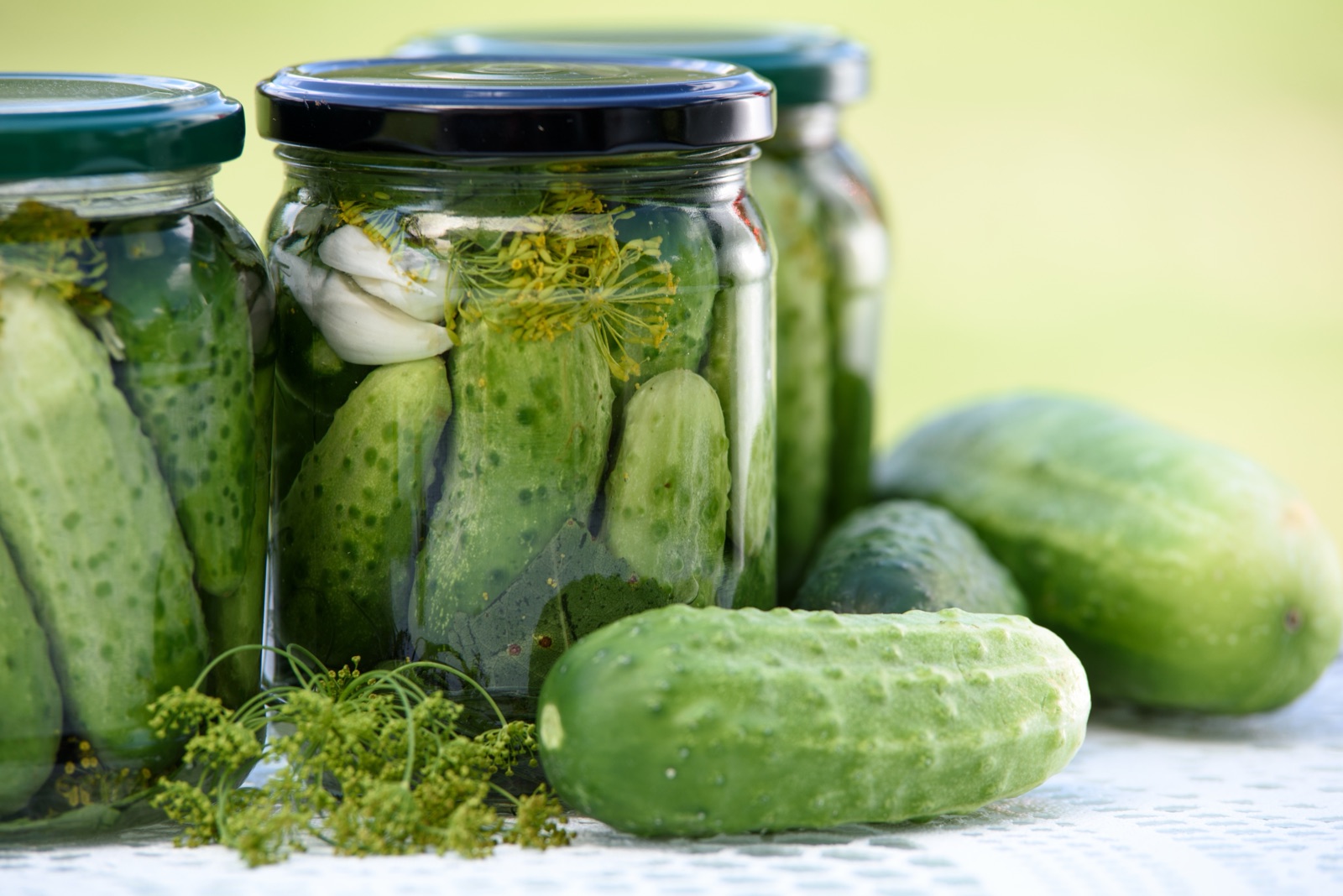
A jar of pickles looks simple — cucumbers, salt, water, a little vinegar and dill. For a food manufacturer pursuing kosher status, that simplicity is deceptive. Here is what certification actually evaluates across ingredients, brine, and equipment, written for the executive who has to sign off on it.
- Subject
- Pickles, relish, and brined / fermented vegetables
- Audience
- Food & beverage executives, plant managers, R&D and QA
- Scope
- Ingredients · Brine · Facility & equipment · Passover
- Kosher class
- Pareve (contains neither meat nor dairy)
- Certifier
- EarthKosher Kosher Certification Agency
The short answer
What kosher certification of pickles involves
Certifying pickles kosher means verifying four connected things — and pickles are more demanding than their ingredient list suggests, because brine and vinegar are acidic “sharp foods” that carry taste into and out of equipment far more aggressively than ordinary foods.
- Ingredients — every component vetted, from cucumbers and dill (inspected for insects) to vinegar, spice blends, firming agents, emulsifiers, flavors and colors.
- Brine — the salt-and-vinegar solution, with the source of any vinegar as the single highest-risk item.
- Equipment & facility — tanks, lines and fillers reviewed and, where shared, kashered — because acidity and salt accelerate taste transfer.
- Ongoing supervision — inspection by a rabbinic supervisor and periodic audits that keep the certification live.
01Why pickles are harder than they look
Most people assume a cucumber floating in salt water is about as kosher-friendly as food gets, and the base ingredients usually are. What makes pickles a specialist product for a certifying agency is chemistry, not ingredient count.
Pickle brine is salty and acidic. In kosher law, salty and sharp-tasting foods — vinegar, brine, garlic, onions, pickles themselves — belong to a category called davar charif, literally a “sharp food.” Sharp foods behave differently from bland ones: they draw absorbed flavor out of the metal and plastic they touch, and they can reactivate residual taste in equipment that would otherwise be considered neutral. Highly salted brine adds a second effect — it transfers taste between the liquid and its vessel in minutes, where a mild liquid might take a full day.
The result: a pickle line is judged less like a cucumber and more like a small vinegar plant.
That single fact drives most of the certification work below. It is why the equipment history of a pickle line matters, why shared tanks are scrutinized, and why the vinegar in the recipe gets more attention than the cucumber.
02The ingredient review
Certification begins with a complete formula disclosure. Each raw material is assessed for its own kosher status and for the supervision it needs from its supplier. The table below summarizes how the common building blocks of a pickle recipe are typically viewed.
| Ingredient | Sensitivity | What certification checks |
|---|---|---|
| Cucumbers & produce | Inspect | Approved sourcing and a protocol to check for insect infestation, which is not kosher. |
| Water & salt | Low | Generally accepted; salt is checked for anti-caking or carrier additives. |
| Vinegar / acetic acid | High | Source of the alcohol behind the vinegar, plus supplier certification. (See §3.) |
| Garlic, dill, mustard, spice blends | Verify | Fresh herbs inspected for insects; blends checked for anti-caking agents, flow aids and carriers. |
| Calcium chloride (firming) | Low | Synthetic and widely accepted as pareve; still confirmed against the approved schedule. |
| Polysorbate 80 (emulsifier) | High | Not kosher by default — the fatty acid can be animal-derived. Requires a certificate confirming a vegetable source and a certified line. |
| Natural flavors | Verify | Composition and carriers vary widely; must carry acceptable certification. |
| Colors | Verify | Turmeric and synthetic colors are typically fine; carmine (cochineal) is insect-derived and not kosher. |
| Preservatives (e.g., sodium benzoate) | Low | Common synthetic preservatives are generally accepted; verified as listed. |
Cucumbers and fresh herbs: the insect question
The cucumber itself is kosher. The concern is what travels with it. Fresh produce and leafy herbs such as dill can carry small insects, and insects are among the clearest non-kosher items. A kosher program therefore establishes where produce is sourced and how it is inspected before it enters the brine.
Additives that surprise manufacturers
Two ingredients account for most of the avoidable certification delays in pickle production. The first is polysorbate 80, a common emulsifier used to disperse dill oil and flavor evenly through the brine. It is often assumed to be innocuous, but it is built on a fatty acid that may be derived from animal tallow — so it needs specific documentation proving a plant source and a certified production line. The second is “natural flavor,” a catch-all that can hide a wide range of sources; it is only acceptable when the flavor house itself is certified.
03The brine — where it gets technical
Brine is where kosher pickle certification earns its reputation for rigor. A brine is salt, water, spices, and — in most modern recipes — vinegar. Two of those elements, the vinegar and the salt concentration, drive the analysis.
Vinegar: the highest-risk ingredient in the jar
Vinegar is made by fermenting alcohol into acetic acid. The kosher question is always: where did the alcohol come from?
- Grape or wine-derived alcoholBecause wine and grape products carry their own stringencies, vinegar built on grape alcohol can be non-kosher year-round. Certifiers verify this is not the source.
- Grain-derived alcoholUsually acceptable during the year, but grain alcohol is a leavening (chametz) concern that removes the product from Passover eligibility.
- Shared vinegar equipmentBecause vinegar is acidic, kosher vinegar generally cannot be produced or stored on lines used for non-kosher vinegar, even after cleaning.
- Fermentation nutrients & dilution waterThe nutrients that feed the vinegar bacteria, and the water used to dilute to strength, must themselves be free of non-kosher origin.
Synthetic and glacial acetic acid produced from petrochemical routes generally raise no kosher concern, which is one reason certified pickle producers pay close attention to exactly which acidulant a supplier ships.
Salt and the soaking effect
Concentrated salt is not just a flavor and preservation tool; in kosher law, prolonged soaking in liquid is treated much like cooking for the purpose of transferring taste — and heavy brine speeds that transfer dramatically. Practically, this means the vessels that hold brine for hours or days are treated as if the pickles were being cooked in them, which raises the bar for any tank or tote that has a mixed production history.
04Manufacturing facility & equipment
Ingredients can be swapped; equipment cannot. This is usually the section that determines how quickly a facility can be certified, and it is where the “sharp food” rules from §1 come home.
Dedicated vs. shared lines
A plant that runs only kosher-eligible vegetable products on its pickle line is straightforward. Complexity enters when tanks, hoses, filters, pasteurizers or fillers are shared with non-certified production — especially anything involving dairy, meat, wine, or non-kosher vinegar. Because acidic brine reactivates and absorbs residual taste, the usual leniencies that apply to bland foods on clean, cold equipment do not apply here. Shared equipment generally must be kashered (a supervised hot-water or heat purge) rather than simply cleaned.
Heat and hot-fill processing
Many commercial pickles are pasteurized or hot-filled for shelf stability. Introducing heat adds a conventional cooking-based route for taste transfer on top of the sharp-food rules, which makes the kosher history of pasteurizers and fillers particularly important to document.
Protecting pareve status
Pickles are naturally pareve — neither meat nor dairy — which is a commercial advantage, since pareve products can be served at both meat and dairy meals and appeal to the broadest kosher market. That status is only preserved if the equipment does not import a meat or dairy identity. Given how readily sharp foods pick up absorbed taste, protecting pareve status is a core reason equipment segregation is reviewed so carefully.
| Asset | Why it matters for pickles |
|---|---|
| Brine & fermentation tanks | Long contact with salty, acidic liquid; prior contents drive kosher history. |
| Pumps, hoses, filters | Carry-over between products; hard-to-clean internal surfaces. |
| Pasteurizer / hot-fill line | Heat adds a cooking-based transfer path; kashering may be required. |
| Fillers & closers | Direct product contact at the final, sealed step. |
| Shared / co-packed lines | Non-kosher, dairy, meat or wine history triggers kashering. |
05Kosher-for-Passover: a separate question
A frequent and costly misunderstanding: year-round kosher certification does not make a pickle kosher for Passover. The pivot point is, once again, the vinegar. Vinegar built on grain alcohol is a leavening (chametz) concern and is not Passover-eligible. A kosher-for-Passover pickle requires vinegar from a permitted source — synthetic, beet-derived, or cider-derived alcohol — along with a dedicated equipment and ingredient review for the season. If a Passover market is part of the business plan, it should be raised at the start of certification, not after.
06The certification pathway
For a manufacturer, the path from interest to a symbol on the label is more predictable than the halachic detail suggests. With EarthKosher it follows a transparent, seven-step approach:
- Inquiry & free quote. A no-obligation quote and viability analysis for your products and facility.
- Application & agreement. Company, product and site details are formalized.
- Ingredient & formula review. Every raw material and its supplier documentation is evaluated.
- Facility inspection. A rabbinic field supervisor (mashgiach) reviews equipment, lines and production flow.
- Kashering, if required. Any shared or previously non-kosher equipment is brought to standard under supervision.
- Certification issued. The kosher certificate and symbol are granted for the approved products.
- Ongoing audits. Periodic inspections and change-review keep the certification current as formulas or suppliers evolve.
Because pickle formulas change — a new vinegar supplier, a reformulated flavor, an added color — the ongoing step matters as much as the first inspection. A single unreviewed ingredient swap can affect status, which is why certification is a living relationship, not a one-time stamp.
Certification Partner
Why food manufacturers certify pickles with EarthKosher
EarthKosher Kosher Certification Agency is a globally accepted kosher certifier founded in 2004 and headquartered in Boulder, Colorado, with additional offices supporting clients across the Americas, Europe, the Middle East and Asia. EarthKosher specializes in natural, organic and specialty foods — the exact category most craft and commercial pickle, brine and fermented-vegetable producers operate in.
EarthKosher is a member of the Association of Kashrus Organizations and its certification is accepted by retailers, distributors and food-service buyers worldwide. Its kosher program is directed by a senior kashrus administrator with decades of industrial kosher-certification experience, giving pickle manufacturers access to the technical depth that vinegar, brine and equipment questions demand — delivered with the responsiveness and affordability EarthKosher is known for.
EarthKosher also offers joint Vegan, Paleo, Non-GMO and Halal certification, so a pickle producer can address several market claims through a single, streamlined program.
Frequently asked
Kosher pickle certification: FAQ
What is involved in the kosher certification of pickles?
Four connected reviews: verifying every ingredient (including cucumbers and dill inspected for insects, and the status of vinegar, spices, firming agents, emulsifiers, flavors and colors); confirming the sourcing of the brine, especially the alcohol behind any vinegar; evaluating manufacturing equipment, since brine and vinegar are acidic “sharp foods” requiring kashering of shared lines; and ongoing supervision by a certifying agency such as EarthKosher, including facility inspection and periodic audits.
Why does vinegar matter so much for kosher pickles?
Vinegar is made by fermenting alcohol into acetic acid, and that alcohol can come from grape or wine sources (a year-round kosher concern) or from grain (a Passover concern). Kosher vinegar can also be compromised by shared equipment, fermentation nutrients, or dilution water tied to non-kosher vinegar. A certifier verifies the alcohol source and the supplier’s kosher documentation before approving it.
Are pickles pareve?
Yes. Pickles are plant-based and classified as pareve — neither meat nor dairy — so they may be served with either. That status can be lost if pickles are produced on equipment shared with dairy or meat, which is why equipment review is central to certification.
Do kosher pickles need to be inspected for insects?
Yes. Cucumbers and fresh herbs such as dill can harbor insects, which are not kosher. A kosher program sets acceptable produce sources and inspection protocols so raw materials are free of infestation before pickling.
Is a kosher pickle automatically kosher for Passover?
No. Year-round kosher certification does not automatically confer kosher-for-Passover status. Vinegar from grain alcohol may be chametz; Passover requires vinegar from non-chametz sources such as synthetic, beet or cider-derived alcohol, plus dedicated equipment review. A separate Passover certification is required.
How do I get my pickles kosher certified?
Contact a recognized kosher certification agency such as EarthKosher. The process begins with a free quote and application, followed by ingredient and formula review, a facility inspection by a rabbinic supervisor (mashgiach), issuance of certification, and ongoing audits. EarthKosher can be reached at (888) 312-3559 or earthkosher.com.
Get a free quote
Ready to certify your pickles kosher?
EarthKosher makes kosher certification understandable, obtainable and affordable — with the technical depth that pickles, brine and vinegar require. Request a no-obligation quote and viability analysis for your products and facility.
Affordable & accepted kosher certification since 2004 · Member, Association of Kashrus Organizations
Web: earthkosher.com · Tel: (888) 312-3559
This article is an educational overview for food-industry professionals. Kosher law contains many nuances and differing opinions; specific determinations for a given product, formula and facility are made by a certifying agency’s rabbinic authority. Contact EarthKosher for guidance on your particular operation.