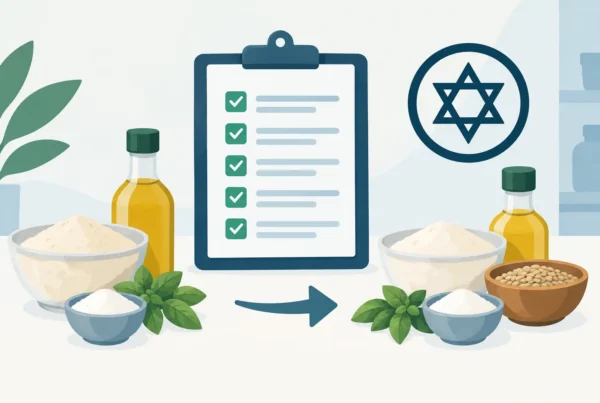


A product can have an excellent formula, a clean label, and strong retail demand, yet still face a costly delay if one ingredient, processing aid, or production change is not reviewed for kosher status. The best kosher practices manufacturers follow are not complicated religious rituals layered onto a factory floor. They are practical controls that protect product integrity, prevent last-minute surprises, and make certification manageable year after year.
For food, beverage, ingredient, natural product, and transportation companies, kosher compliance works best when it becomes part of normal quality and change-control procedures. The goal is simple: know what enters the facility, understand how it is handled, and communicate before a change affects certified production.
Why kosher controls belong in everyday operations
Kosher certification is evaluated at the product and facility level. A certifying agency reviews ingredients, processing aids, equipment, production procedures, packaging claims, and, when applicable, cleaning and scheduling practices. That means a finished product that appears simple may require careful review of items that never show up prominently on its consumer label.
For example, a flavor, emulsifier, release agent, enzyme, carrier, or processing aid can affect kosher eligibility. The same is true when a manufacturer brings in a new supplier, adds a co-packed product, changes a formula, or runs a different product on shared equipment. None of these changes automatically create a problem. The risk comes from making them without first confirming their effect on the kosher program.
This is also why kosher compliance supports broader business discipline. Clear supplier records, documented formulas, controlled purchasing, and clean production communication can help operations teams respond faster to customer questions, retailer requirements, and audits.
Best kosher practices manufacturers should build first
Assign a clear internal owner
Every certified company needs a person or small team responsible for kosher communication. This does not require a full-time kosher specialist. It does require someone who knows which departments must be involved when an ingredient, supplier, formula, label, or process changes.
In smaller companies, that person may be the owner, operations manager, or quality lead. In larger facilities, it is often a quality assurance or regulatory contact. What matters is authority and follow-through. If purchasing can approve a substitute without notifying the kosher contact, the program is exposed to avoidable risk.
The internal owner should maintain current contact information for the certifier and make sure production, purchasing, research and development, and warehouse teams know when to raise a question. Early communication is almost always faster and less expensive than correcting an unapproved change after products have shipped.
Control ingredients beyond the formula sheet
A formula sheet is essential, but it is only the beginning. Manufacturers should maintain a current list of all materials used in certified products, including ingredients, sub-ingredients where needed, processing aids, rework, lubricants that could contact product, and packaging components when they carry a kosher claim.
Each approved material should be tied to a specific supplier, manufacturer, product name, and kosher documentation when required. A material with the same generic description is not necessarily interchangeable. Two vanilla flavors, for instance, may have different carriers, solvents, or certification status. A purchasing substitution that seems harmless can change the kosher review entirely.
Receiving and purchasing procedures should reinforce this control. If a supplier changes, a material code changes, or a replacement is proposed because of availability or price, the kosher contact should be notified before the order is placed or used. This is especially valuable during supply disruptions, when teams are under pressure to find alternatives quickly.
Manage shared equipment and production schedules
Facilities that produce both kosher and non-kosher items, or different kosher designations, need a clear understanding of how equipment is shared. The right process depends on the products involved, temperatures, equipment design, cleaning methods, and the applicable kosher requirements. There is no one-size-fits-all rule that a manufacturer should assume on its own.
In some situations, production order can simplify operations. In others, cleaning, downtime, or a specific kosherization procedure may be needed before a certified run. The important practice is to provide accurate production information to the certifier before establishing a schedule, not after an urgent order is already on the line.
This is particularly relevant for co-manufacturers and multi-tenant facilities. Brand owners should not assume that a co-packer’s general capability means their specific formula and production path are covered. The product, ingredients, equipment, and label all need to align with the approved certification arrangement.
Keep labels aligned with approval
The kosher symbol on a label is a business claim as well as a certification mark. It should appear only on products that have been approved, in the exact form authorized by the certifying agency. This includes private-label products, new sizes, reformulations, seasonal packaging, and exports.
A practical approval process brings the kosher contact into label review before final artwork is released. The review should confirm the product name, plant or production location, ingredient status, and any designation that may apply. It is much easier to revise a proof than to manage obsolete packaging or a retailer concern after printing.
Document the decisions that matter
Good records make certification easier to maintain. They also reduce the disruption when personnel change or a question arises months after a production run. A useful kosher file should be organized enough that the operations team can quickly locate the relevant information.
At a minimum, manufacturers should retain:
- Current formulas and ingredient specifications for certified products
- Supplier and manufacturer details for approved materials
- Kosher letters or certificates for ingredients when requested
- Records of process, equipment, or cleaning changes affecting certified production
- Approved label artwork and communication with the certifying agency
These records do not need to become a separate bureaucracy. Many companies can incorporate them into existing quality, supplier approval, and document-control systems. The best approach is the one employees will actually use consistently.
Prepare for a facility review without overcomplicating it
A facility review is most productive when the company presents a clear picture of what happens from receiving through finished goods. The reviewer may need to understand ingredient storage, production flow, equipment use, cleaning procedures, rework handling, warehouse controls, and label application.
Preparation begins with accuracy, not perfection. Make available the current ingredient list, formulas, product list, floor plan if available, and a realistic production description. If a process is unusual or a material is difficult to explain, say so. Clear questions early in the process help the certifier provide workable guidance.
Manufacturers sometimes worry that a review will expose every operational inconvenience. A good certification process should focus on the details relevant to kosher status and identify practical ways to meet requirements. For a growing business, that may mean building controls around the operation as it exists rather than demanding unnecessary complexity.
Treat changes as the key compliance moment
The strongest kosher programs are not defined by what happens on the first day of certification. They are defined by what happens six months later when a supplier discontinues an ingredient, a customer asks for a new flavor, or the production team needs to move to another facility.
Create a simple trigger list for changes that require review: new ingredients, supplier substitutions, formula adjustments, new products, new co-packers, equipment additions, production-location changes, and label revisions. Train the people who initiate those changes to contact the kosher owner early.
This step is where speed and responsiveness from a certifier matter. A business should be able to ask a direct question, receive understandable guidance, and keep a promising product launch moving. At EarthKosher, the aim is to make that communication affordable, accepted, and workable for real manufacturing teams.
Avoid the most common preventable setbacks
The most frequent issues are rarely caused by a lack of effort. They come from assumptions. A company may assume a supplier’s statement is enough, that a certified ingredient can be purchased from any source, that a new flavor is comparable to the old one, or that a previous approval covers an entirely new product format.
Another common problem is waiting until a retailer, distributor, or customer asks for kosher certification before beginning the process. Certification can move efficiently when information is ready and communication is prompt, but manufacturers benefit from allowing time for review, facility questions, and label approval. Starting early gives the business more options.
Cost control matters here as well. The least expensive path is usually not the one with the fewest controls. It is the one that prevents rework, rushed packaging corrections, rejected ingredients, and delayed production. Straightforward procedures protect both compliance and margins.
Make kosher certification a growth-ready system
Kosher certification can support access to customers who look for a trusted symbol, but its operational value reaches further. It encourages manufacturers to know their supply chain, manage change carefully, and make reliable claims in the marketplace. Those are useful habits whether a company sells locally, nationally, or across international markets.
The right practices should feel understandable and doable. Start by giving one internal owner visibility into ingredients and changes, then build the records and communication steps that fit your facility. When questions arise, asking before production begins keeps certification from becoming an obstacle and helps it remain a practical part of how your business grows.